Article by
Scott Ward MBA CCMI
Scott Ward is the founder and CEO of Humanise Solutions, which he established three years ago to help organisations elevate their people, leadership and culture through a human-centric, evidence-based approach. Before moving into business and academia, Scott spent seven years as a professional footballer, playing for Luton Town, Crawley Town and Coventry City FC until injury brought his playing career to a close — a turning point that shaped both his research interests and his approach to leadership.
Scott holds an MBA from Warwick Business School, where his research explored the causal relationship between trauma and decision-making — work that continues to inform how he supports young adults, leaders and teams under pressure. Recognised as a Companion of the Chartered Management Institute (CCMI), its highest grade of membership, he combines academic rigour with the discipline, resilience and team-first mindset of the professional game. At the heart of everything he does is a simple belief: that people perform at their best when they are led, developed and valued as human beings first.
A bowl of fruit and a yoga app subscription aren’t a wellbeing strategy; they’re a distraction from a culture that’s quietly burning out. You’ve likely seen the cycle where new initiatives are launched with fanfare, yet frontline managers feel squeezed and turnover amongst younger employees remains high. It’s frustrating when fostering wellbeing at work feels like a tick-box exercise that fails to deliver a meaningful return on investment. You deserve a strategy that actually supports your team’s growth and psychological health.
We’ll show you how to move beyond surface-level benefits to cultivate a genuine culture of flourishing, resilience, and sustainable performance. This guide provides a clear framework for nurturing leadership that prioritises psychological safety and human connection. By focusing on human-centred growth, you can reduce absenteeism and create a professional environment where your people feel safe to excel.
Key Takeaways
- Shift from a perk-heavy mindset to a culture-first approach that supports genuine human flourishing and sustainable performance.
- Explore how job design and autonomy serve as vital components in reducing stress and improving overall workplace health.
- Gain insights into fostering wellbeing at work by supporting frontline managers so they don’t succumb to the squeezed middle phenomenon.
- Learn to audit your current culture using a human-centred methodology that identifies the root causes of staff turnover and presenteeism.
- Understand the importance of nurturing leadership and emotional intelligence in creating a safe space for teams to excel.
What Does Fostering Wellbeing at Work Truly Mean in 2026?
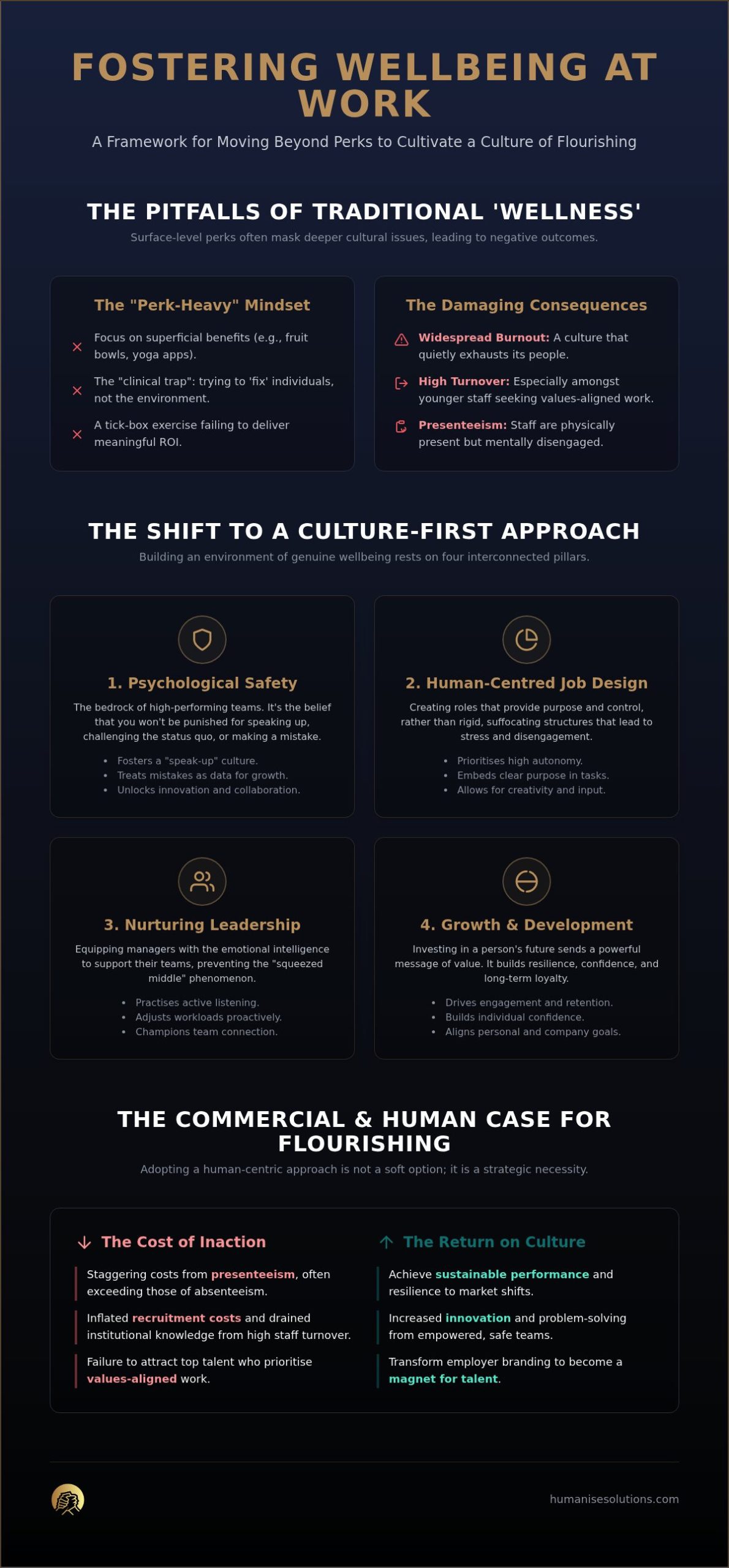
True wellbeing isn’t found in a brochure or a corporate discount portal. It’s a state of flourishing where individuals realise their own potential, cope with the normal stresses of life, and contribute meaningfully to their community. In the current climate, fostering wellbeing at work has shifted from a peripheral HR concern to the very heartbeat of organisational health. We are moving away from the “perk-heavy” era of the 2010s, where superficial fixes were expected to mask deep-seated cultural issues. In 2026, the requirement is culture-first, demanding a foundation of human-centric growth that prioritises the person before the process. This isn’t a soft option; it’s a strategic necessity for any UK organisation aiming for long-term viability.
The Evolution from Wellness to Wellbeing
For a decade, many organisations relied on Workplace wellness programs that focused almost exclusively on physical health markers. Gym memberships and fruit bowls were the standard, yet they failed to stem the rising tide of burnout or address the decline in mental health amongst younger professionals. We now recognise that these were often symptoms of a “clinical trap”, where businesses tried to fix individuals rather than the environments they worked in. Holistic wellbeing is the integration of physical health, psychological safety, and purposeful work. This shift towards psychosocial safety and inclusive environments ensures that employees don’t just survive their week but actually thrive within it.
The Economic and Social Case for Human Flourishing
The commercial argument for fostering wellbeing at work is undeniable. UK businesses face staggering costs from presenteeism, where staff are physically present but mentally disengaged, often costing more than absenteeism itself. High staff turnover, particularly amongst under-35s who prioritise values-aligned work, drains institutional knowledge and inflates recruitment costs. By adopting a nurturing leadership style, organisations can transform their employer branding, making them a magnet for top talent. This isn’t just about being “nice”; it’s about commercial sustainability. When people feel safe to excel and supported by their managers, they are more resilient to market shifts and more innovative in their problem-solving. This human-centric approach is the only way to achieve Team Excellence in a volatile market where traditional command-and-control structures are crumbling.
The Holistic Domains of a Healthy Workplace Culture
A healthy workplace culture functions like a living ecosystem. It requires the seamless integration of physical vitality, mental clarity, and social connection. When we talk about fostering wellbeing at work, we aren’t just discussing individual health; we’re examining how people interact within their professional environment. Job design plays a critical role here. When employees have high levels of autonomy and clear purpose, work-related stress naturally decreases. It’s about creating roles that allow for breathing room and creative input rather than rigid, suffocating structures.
Managers are the architects of this environment. Supporting employee wellbeing requires more than a passive interest in a team’s output. It involves active listening and adjusting workloads to prevent the “squeezed” feeling discussed earlier. For younger employees, particularly Gen Z, this connection is vital. They seek values-aligned work where their personal ethics match the organisation’s mission. Collective wellbeing thrives when individual purpose aligns with Team Excellence, creating a shared sense of accomplishment that transcends individual tasks.
Psychological Safety: The Bedrock of Excellence
Psychological safety is the quiet confidence that you won’t be punished for making a mistake or challenging the status quo. It’s the belief that your voice matters. Without it, innovation withers. Employees who feel unsafe often resort to “quiet quitting”, doing the bare minimum to avoid notice whilst their potential remains untapped. Collaborative leadership changes this dynamic. By inviting open dialogue, leaders build a “speak-up” culture where mistakes are treated as data points for growth rather than reasons for blame. This safety is the foundation upon which high-performing teams are built.
Personal Growth and Professional Development
Growth is a fundamental human need. When an organisation invests in a person’s future, it sends a powerful message of value and belonging. This is why learning and development is a primary driver of fostering wellbeing at work. Feeling “invested in” builds resilience and confidence, helping individuals navigate the complexities of modern professional life. Our bespoke learning and development programmes are designed to bridge the gap between current skills and future potential, ensuring your team feels capable of meeting new challenges. This sense of progression is essential for long-term retention and social connection. If you’re ready to cultivate a more resilient team, exploring our Team Excellence workshops is a logical next step on your journey.
Why Traditional Wellbeing Initiatives Often Fail
Investment in workplace health is at an all-time high, yet fostering wellbeing at work often feels like an uphill battle. This paradox exists because many organisations fall into the “Clinical Trap”, treating Employee Assistance Programmes (EAPs) as a cure-all for systemic cultural issues. It’s an approach that attempts to fix the individual whilst leaving a broken environment untouched. Credible management tips for employee wellbeing emphasise that true health is preventative. When a “Perks vs Practice” gap emerges, where corporate slogans are undermined by daily behaviours, the result is cynicism rather than flourishing.
British workers are also navigating a period of profound uncertainty. Between the cycle of “Forever Layoffs” and the rapid advancement of AI, anxiety has become a baseline state for many. Traditional initiatives fail because they don’t address this existential stress; they offer superficial comfort whilst the structural foundations of the workplace remain unstable. To move forward, we must look at the human experience through a lens of sustainable growth rather than quarterly damage control. Real change requires moving beyond the surface to nurture the roots of the organisation. Building a robust workplace wellbeing strategy UK organisations can genuinely rely on means addressing these psychosocial risks at their source rather than papering over them with surface-level perks.
The Frontline Manager Crisis
Middle managers are currently the most squeezed demographic in the workforce. They carry the weight of senior leadership’s expectations whilst trying to protect their teams from burnout. Often, they have the responsibility for fostering wellbeing at work without the specific training to deliver it. This leads to “performative wellbeing”, where managers feel they must hide their own stress to appear strong. Nurturing leadership training is the essential missing link. It provides the emotional intelligence tools required to support others without sacrificing one’s own mental health or professional integrity.
Misunderstanding Gen Z Expectations
There is a common misconception that younger workers lack resilience. In reality, they simply define it differently. Gen Z prioritise mental health support and social mobility over traditional status markers or corner offices. They demand authenticity and transparency in leadership communication. If they sense a disconnect between what a leader says and what they do, they won’t hesitate to leave. For these employees, wellbeing is a non-negotiable part of the contract, not a bonus. Leaders who embrace this shift find that younger teams are incredibly dedicated when they feel their humanity is truly seen and respected.
A Practical Framework for Fostering Wellbeing
Engagement surveys often fail because they capture a fleeting moment rather than the underlying emotional climate. To begin fostering wellbeing at work, you must audit your culture through a human-centric lens. This means looking at the quality of social connections and the level of psychological safety present in daily interactions. It’s about depth, not just data. When you understand the lived experience of your team, you can begin to address the root causes of friction and fatigue.
Step two moves the focus to leadership. You need to invest in development that centres on empathy and emotional intelligence, moving away from sterile management techniques. Once leaders are equipped with these human skills, they can redesign work to respect “human rhythms”. This involves prioritising autonomy and ensuring rest is a respected part of the professional cycle. Sustainable performance isn’t a constant sprint; it’s a rhythmic progression that allows for recovery and reflection.
Inclusion is the fourth critical step in this framework. By creating specific tracks for underrepresented groups, such as those in Women leadership, you ensure that the opportunity to flourish is available to everyone. Finally, measure your success through retention, engagement levels, and qualitative growth markers. These indicators tell a much richer story of organisational health than absenteeism rates alone. They show a transition from a culture of survival to one of genuine Team Excellence. For a detailed, evidence-based template to guide this process, our human-centric workplace wellbeing strategy UK template for 2026 provides a structured path from cultural audit to sustainable transformation.
Implementing Nurturing Leadership
The shift from “command and control” to a more supportive style is transformative for any organisation. By focusing on nurturing leadership skills, managers learn to encourage self-belief whilst maintaining clear professional boundaries. It’s about having the confidence to navigate sensitive conversations without crossing into clinical territory. This approach builds a foundation of trust. It ensures that employees feel seen as individuals with unique needs, which is the cornerstone of a resilient and loyal workforce.
Supporting Early Careers and Social Mobility
Young adults entering the workforce today face unique pressures that previous generations might not fully grasp. Fostering wellbeing amongst young adults requires a blend of mentorship and structured professional development. Social mobility training bridges the gap for talent from diverse backgrounds, ensuring that everyone has the tools to succeed regardless of their starting point. By providing this specific support, you cultivate a future-proof workforce that feels deeply valued. This investment in the next generation is a hallmark of a truly human-centric organisation.
If you’re ready to move beyond superficial fixes and build a culture that lasts, our Fostering Wellbeing programmes provide the evidence-based framework your organisation needs to thrive.
Cultivating Sustainable Growth with Humanise Solutions
The journey to fostering wellbeing at work isn’t a destination reached through a single seminar or a new policy document. It is a continuous process of cultivation that requires a partner who understands the nuance of human dynamics. Humanise Solutions acts as both a visionary guide and a grounded expert, helping organisations move beyond superficial fixes that fail to address the root causes of burnout and turnover. We reject the “quick-fix” culture in favour of a methodical, evidence-based approach that drives lasting behavioural change. Our goal is to help you transition from a state of mere survival to a future defined by human flourishing.
Our human-centric methodology treats every employee as a whole person. We recognise that professional performance is inextricably linked to psychological health and social connection. By focusing on long-term impact, we ensure that the growth your organisation experiences is sustainable and resilient. We don’t just provide data; we provide the training and support required to transform that data into a thriving workplace culture. This steady, deliberate pace mirrors our commitment to your team’s development, ensuring every individual feels supported rather than overwhelmed by the demands of the modern market.
Bespoke Programmes for Every Level
We offer tailored initiatives designed to meet the specific needs of senior executives, women leaders, and young professionals. These aren’t generic training sessions. They are bespoke workshops created to address the unique challenges of your specific environment. By focusing on nurturing leadership and Team Excellence, we help UK firms build cultures where psychological safety is a daily reality. Our specialist training provides frontline managers with the emotional intelligence tools they need to support their teams effectively, bridging the gap left by traditional corporate consulting. We provide national UK coverage, bringing our evidence-based methodology directly to your doorstep.
Begin Your Journey Towards Human Flourishing
Wellbeing is the foundation of excellence. When your people flourish, your organisation flourishes. We invite you to consider the transition from your current state to a future where your people feel safe to excel and empowered to contribute. This shift requires a bold commitment to human values and a pragmatic approach to leadership development. By investing in the internal qualities of your team, you create a professional environment that attracts top talent and retains the brilliant minds you already have. The path to sustainable growth starts with a single, human-centric step.
If you’re ready to build a culture of resilience and high performance, explore our bespoke development programmes to foster wellbeing in your organisation. Let’s work together to create a workplace where everyone has the opportunity to thrive.
Embrace the Future of Human-Centred Growth
Cultivating a culture where people truly flourish is a deliberate choice that pays dividends in retention and performance. We’ve explored how moving beyond superficial perks to address systemic issues, such as the “squeezed middle” manager crisis, is essential for modern organisational health. True success lies in integrating psychological safety and personal development into the very fabric of your daily operations. It’s about recognising that your people aren’t just assets; they’re the heartbeat of your enterprise.
By fostering wellbeing at work through our evidence-based methodology, you don’t just reduce absenteeism; you unlock the full potential of your team. Our expert-led workshops focus on human-centric growth, offering specialised tracks for Women in Leadership and Young Adult Programmes to ensure every level of your business feels invested in and valued. This commitment to Team Excellence creates a resilient foundation that can weather any market uncertainty.
Discover how Humanise Solutions can transform your workplace culture through bespoke development. The transition from current challenges to a future of flourishing is within reach, and we’re here to partner with you on that journey of transformation. Your team’s potential is waiting to be realised.
Frequently Asked Questions
What is the difference between workplace wellness and workplace wellbeing?
Workplace wellness often focuses on physical health initiatives, such as gym memberships or health screenings. In contrast, workplace wellbeing describes a holistic state where individuals flourish through purposeful work, social connection, and psychological safety. It is about the entire human experience within the organisation rather than just physical fitness or medical markers.
How can small UK businesses foster wellbeing on a limited budget?
Small businesses can achieve significant results by focusing on job design and autonomy rather than expensive perks. Providing employees with a sense of control over their work and fostering open, honest communication costs nothing but builds immense trust. Prioritising these human connections creates a culture of flourishing that doesn’t require a large corporate budget.
What is the role of a line manager in fostering wellbeing at work?
Line managers are the primary architects of the daily employee experience. They act as the bridge between corporate strategy and individual needs, ensuring that team members feel seen and supported. By adopting a nurturing leadership style, they can mitigate stress and create the psychological safety necessary for fostering wellbeing at work.
How does fostering wellbeing at work improve employee retention?
Fostering wellbeing at work improves retention by creating a professional environment where people feel genuinely valued and safe to excel. When employees experience a culture of flourishing and sustainable growth, their emotional commitment to the organisation deepens. This sense of belonging and value makes them far less likely to seek opportunities amongst competitors.
Is psychological safety the same as wellbeing?
Psychological safety is the foundation of wellbeing, but they are not identical concepts. Safety is the belief that one won’t be punished for mistakes or speaking up, whilst wellbeing is the broader state of flourishing that results from that safety. Without the bedrock of safety, true wellbeing is impossible to sustain within a professional team.
Can leadership training really improve the mental health of a team?
Leadership training directly impacts a team’s mental health by reducing management-related stressors and improving social dynamics. When leaders learn to lead with empathy and emotional intelligence, they create environments that prevent burnout and encourage resilience. This preventative approach is far more effective than relying on clinical interventions after a crisis has already occurred.
How do we measure the ROI of wellbeing initiatives?
Measuring the return on investment requires looking beyond simple absenteeism figures to track qualitative growth markers and engagement levels. High retention rates and increased innovation are strong indicators that your wellbeing strategy is working. By auditing the culture through a human-centric lens, you can see the tangible impact on team excellence and commercial sustainability.
What are the most common mistakes companies make when fostering wellbeing?
The most frequent mistake is falling into the “Clinical Trap” by relying on EAPs to fix systemic cultural problems. Many organisations also ignore the “squeezed middle” manager, expecting them to support their teams without providing the necessary training. These superficial fixes often lead to cynicism rather than the genuine flourishing that comes from a culture-first approach.