Article by
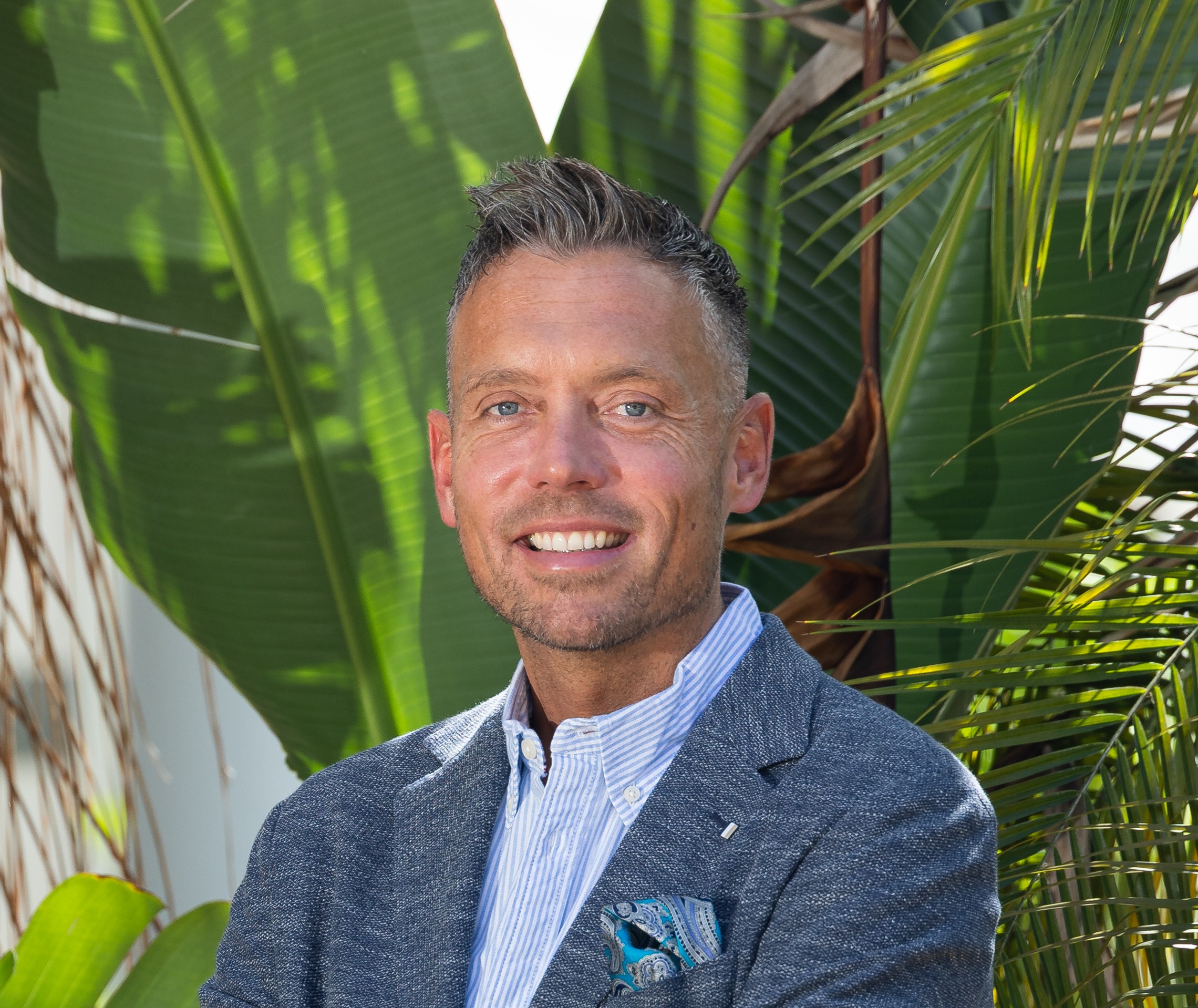
Scott Ward MBA CCMI
Scott Ward is the founder and CEO of Humanise Solutions, which he established three years ago to help organisations elevate their people, leadership and culture through a human-centric, evidence-based approach. Before moving into business and academia, Scott spent seven years as a professional footballer, playing for Luton Town, Crawley Town and Coventry City FC until injury brought his playing career to a close — a turning point that shaped both his research interests and his approach to leadership.
Scott holds an MBA from Warwick Business School, where his research explored the causal relationship between trauma and decision-making — work that continues to inform how he supports young adults, leaders and teams under pressure. Recognised as a Companion of the Chartered Management Institute (CCMI), its highest grade of membership, he combines academic rigour with the discipline, resilience and team-first mindset of the professional game. At the heart of everything he does is a simple belief: that people perform at their best when they are led, developed and valued as human beings first.
What if the most significant barrier to your organisation’s growth isn’t a lack of technical skill, but a hidden culture of silence? You likely recognise the subtle signs of “quiet quitting” or the hesitation in a colleague’s voice when they have a dissenting idea. It’s a common frustration for leaders who want to innovate but find their teams playing it safe to avoid mistakes. With poor mental health costing UK employers an estimated £51 billion per year, the need for a more empathetic, human-centric approach has never been more urgent.
This is where workplace psychological safety training moves beyond a simple compliance exercise to become your primary leading architecture. By rooting your strategy in evidence-based methods and trauma prevention, you can unlock the dormant potential within your leadership and teams. In this guide, we’ll explore how to replace fear with confidence, reduce staff turnover, and build a high-performing culture where every individual feels empowered to contribute their best work. We will move from the challenges of remote communication to a future where your team flourishes through trust and psychological well-being.
Key Takeaways
- Understand how workplace psychological safety training serves as a leading architecture rather than a soft skill, transforming how your team handles interpersonal risk.
- Explore the science of Nurturing Leadership to create secure bases that prevent trauma and foster resilience in high-pressure professional environments.
- Discover why bespoke learning tracks for specific groups, such as women and young adults, are more effective than generic, off-the-shelf workshops.
- Learn how to conduct an organisational design audit to identify skill gaps and bridge the distance between theoretical safety and daily team behaviours.
- Gain insights into evidence-based frameworks that drive high programme completion rates and unlock the long-term potential of your entire organisation.
What is Workplace Psychological Safety Training?
At its core, What is Psychological Safety? It is the shared belief that a team environment is safe for interpersonal risk-taking. Whilst the definition is simple, the implementation is often complex. Effective workplace psychological safety training serves as the essential bridge between this theoretical understanding and the actual, lived behaviours within your organisation. Without structured intervention, safety remains a vague aspiration rather than a tangible asset. It’s the difference between a policy manual and a lived culture.
We define this framework as “leading architecture.” This perspective moves away from the outdated idea of “soft skills” and positions psychological health as the foundational structure of any high-performing team. Just as a physical building requires a blueprint to ensure stability, your leadership requires a methodical framework to support human flourishing. This shift from traditional compliance-based training to a human-centric model ensures that people are not just managed, but truly nurtured. It is a practical tool for growth.
The Human-Centred Standard for 2026
In the professional landscape of 2026, the human experience must be the central focus of every interaction. This standard requires more than superficial politeness. True safety fosters a culture of candour where truth-telling is encouraged and dissent is valued. It’s about creating a space where team members feel comfortable admitting mistakes or proposing radical ideas without fear. By prioritising empathy, leaders can unlock the full potential of their teams, moving beyond mere productivity to genuine innovation. When empathy is woven into Learning & Development programmes, it creates a sustainable environment where people feel secure enough to excel.
The Evidence-Based Need for Intervention
Our approach relies on over 12 years of research into decision-making to inform our methodologies. This scientific foundation is vital for trauma prevention in high-pressure environments. With poor mental health costing UK employers an estimated £51 billion each year, the need for proactive intervention is clear. Evidence-based workplace psychological safety training provides the tools to identify psychosocial risks before they lead to burnout or turnover. By celebrating unique abilities and individual perspectives, organisations can drive sustainable growth. This isn’t just about avoiding failure; it’s about building the resilience required to thrive in a complex world.
The Science of Nurturing Leadership and Trauma Prevention
High performance isn’t simply the result of individual effort; it’s the product of a carefully constructed environment. Our Nurturing Leadership model functions as a secure base, providing the psychological stability teams need to explore, innovate, and take risks. This isn’t a soft metaphor. It’s a rigorous leading architecture. When leaders act as a secure base, they provide both protection and encouragement, allowing team members to push boundaries without the paralyzing fear of failure. This approach directly challenges the outdated “command and control” style that often stifles the very talent it seeks to manage.
The implementation of framework for psychological safety requires a deep understanding of human biology. Comprehensive workplace psychological safety training reduces the cognitive load on your employees. When the brain is constantly scanning for social threats or potential humiliation, it has less energy for complex problem-solving and creative thinking. By removing these invisible barriers, we enhance decision-making across the entire organisation. Inclusive leadership then becomes a natural byproduct of a safe environment, ensuring that your organisational design truly celebrates unique abilities and diverse perspectives.
Trauma Prevention as a Corporate Responsibility
Trauma prevention in a professional context is the proactive identification and mitigation of psychosocial risks based on over 12 years of research into decision-making and human behaviour. Training empowers leaders to spot micro-stressors, such as subtle exclusionary behaviours or unrealistic workloads, before they escalate into chronic stress or burnout. By integrating specific “Self-Care” and “Mental Health Awareness” modules, you provide your team with the tools to maintain their own resilience. This proactive stance ensures that the workplace remains a space of growth rather than a source of distress. If you’re looking to build this resilience within your own organisation, you can speak with our specialists about tailored programmes.
Cultivating Nurturing Leadership Behaviours
Nurturing leadership represents a fundamental shift in how power is exercised. It replaces rigid hierarchy with a dynamic flow of trust and mutual respect. A core skill in this transition is the ability to give and receive feedback with radical candour. In a safe culture, feedback isn’t a weapon; it’s a gift that fuels personal and professional development. Effective workplace psychological safety training teaches teams how to navigate these conversations whilst maintaining individual wellbeing. This collaborative approach to team-working ensures that performance is boosted through collective intelligence rather than individual pressure, creating a sustainable path to excellence.
Why Standard Training Often Fails to Deliver Lasting Safety
Many organisations invest in off-the-shelf SaaS platforms or generic workshops, hoping for a quick fix to complex cultural challenges. However, these “one-size-fits-all” solutions often fail to address the unique interpersonal nuances of a specific team. Whilst a digital module might provide basic definitions, it rarely translates into the sustained behavioural change required for elite performance. True transformation requires bespoke Learning & Development that treats safety as an ongoing journey rather than a single event on a calendar. When training is detached from the daily human experience, it becomes another compliance task rather than a catalyst for growth.
A common paradox exists where leaders believe they have created a “safe” culture, yet silence and fear still permeate the ranks. This happens when there is a fundamental disconnect between stated values and actual interpersonal dynamics. Understanding the science of psychological safety reveals that silence is often a rational response to perceived social threats. If training doesn’t integrate Equality, Diversity, and Inclusion (ED&I) into its core, it will fail to reach those who feel most marginalised. Without this integration, the most innovative ideas remain trapped behind a wall of hesitation.
The Gap Between Policy and Behaviour
A written policy on “dignity at work” is merely words on a page without the behavioural training to support it. Bridging this gap requires a deep focus on emotional intelligence and an awareness of unconscious bias. We don’t just provide information; we use a matrix partner system to ensure long-term completion and accountability. This methodology ensures that the principles of workplace psychological safety training are woven into the very fabric of leadership habits. It’s about moving from policy to practice, ensuring every interaction reflects the organisation’s commitment to human flourishing and sustainable team excellence.
Impact on Early Careers and Gen Z Talent
The stakes are particularly high for the next generation of talent. In the UK, there are currently 807,000 NEET individuals, with 31% citing mental-health barriers as a significant hurdle. A lack of psychological safety disproportionately affects young adults who are just entering the workforce and may lack the resilience of more seasoned colleagues. To future-proof your organisation, it’s essential to implement specialised Young Adult Programmes. These initiatives provide the necessary secure base for early-career professionals to develop their unique abilities. By investing in workplace psychological safety training tailored for Gen Z, you aren’t just filling roles; you’re cultivating the visionary leaders of tomorrow.
A Framework for Implementing Psychological Safety Training
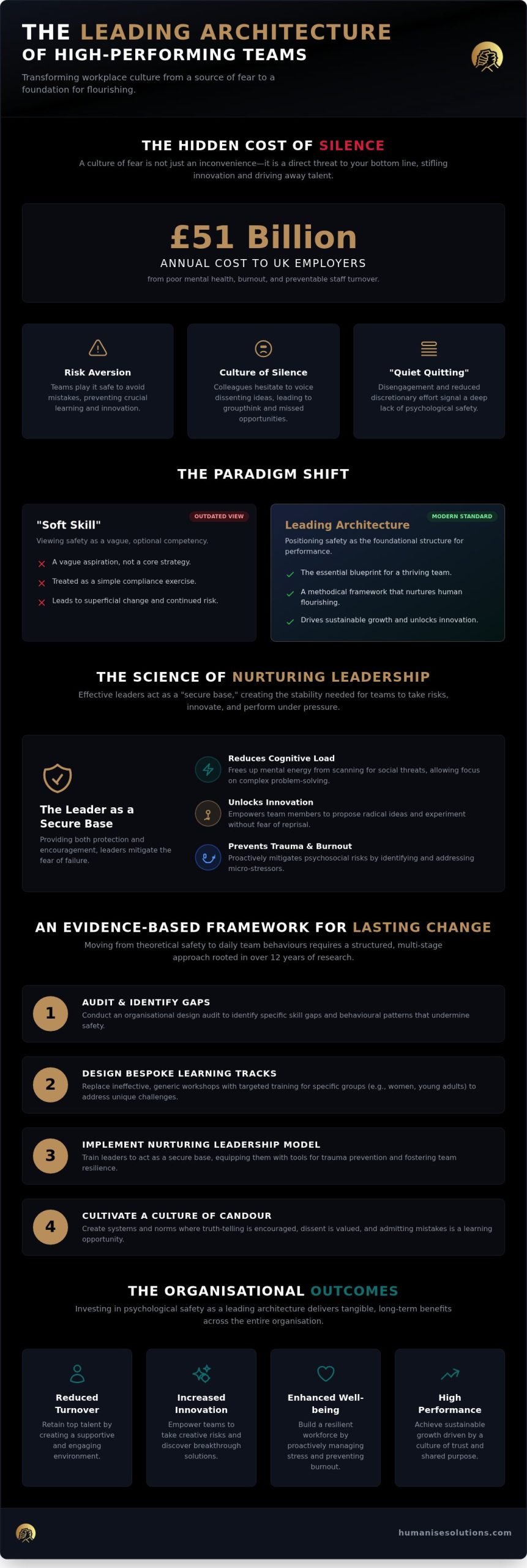
Transitioning from a culture of silence to one of high performance requires a methodical blueprint. It isn’t enough to simply encourage people to speak up. You must build the leading architecture that makes such candour possible and sustainable. Our framework for workplace psychological safety training is designed to move beyond theory and into the realm of practical, measurable transformation. By following a structured path, leaders can ensure that their investment in people leads to genuine organisational flourishing.
The journey begins with a comprehensive Organisational Design audit. This diagnostic phase identifies the specific skill gaps and cultural friction points within your unique environment. Following this, we implement bespoke learning tracks. These aren’t generic modules; they are tailored to different levels of the organisation, such as specialised tracks for women in leadership or early-career professionals. This ensures the content resonates with the lived experience of every team member.
Accountability is ensured through certified workshops, providing tangible credentials that reinforce long-term commitment. To sustain these changes at the top, we establish 1-1 coaching for executives. This personal support helps leaders model safe behaviours and navigate the complexities of power dynamics with empathy and logic. Finally, we measure progress through performance improvement metrics. This data-driven approach ensures that the workplace psychological safety training delivers a measurable return on your investment. If you’re ready to build a high-performing culture rooted in trust, book a consultation with our experts today.
Measuring the ROI of Human-Centric Growth
Tracking the ROI of human-centric growth is essential for long-term sustainability. One of our key KPIs is the feedback rating from participants. At Humanise Solutions, we maintain a 9.98% benchmark for programme delivery. High scores here correlate directly with reduced staff turnover and improved wellbeing across the board. By using specific training evaluation modules, we ensure that every outcome aligns with your specific organisational goals. This steady, methodical pace of measurement builds trust and proves the efficacy of the methodology.
Specialised Tracks: Women and Young Adults
We recognise that different groups face unique challenges that require tailored support. For example, women in leadership often require specific safety frameworks to navigate systemic hurdles, which is why our ILM-certified programmes are so vital. Similarly, social mobility initiatives require a human-centric safety net to be effective. Our young adult programmes focus on providing the confidence and resilience that early-career talent needs to flourish. By addressing these specific needs, you create an inclusive environment where every individual has the opportunity to reach their full potential.
Bespoke Psychological Safety with Humanise Solutions
Humanise Solutions stands as a distinctive partner in the professional landscape. As the 5th largest digital recruiter in EMEA, our mission is “Elevating People” by integrating psychological depth into the heart of recruitment and development. Our workplace psychological safety training isn’t a peripheral service; it’s the core leading architecture that ensures long-term sustainability for high-performing teams. We don’t just teach theory. We deliver results. Our programmes boast a 100% completion rate and yield 50-80% job outcomes, providing tangible proof that a human-centric approach is the most effective path to success.
By choosing a bespoke path, leaders can move away from the sterile, detached language of traditional consulting. We invite you to humanise your organisation through certified, scientific interventions that prioritise the human flourishing of every team member. This methodical approach builds trust and ensures that your investment in people is directly aligned with your specific organisational goals. It’s about creating a culture where people don’t just survive; they truly thrive.
From Elite Sport to Global Corporates
The methodology we employ is refined by the highest levels of performance. Our expertise is drawn from elite football and Olympic disciplines, where the margin for error is non-existent and psychological resilience is paramount. Led by visionaries like Serena Kersten (MBE) and Scott Ward (MBA, CCMI), we’ve built a multi-million-pound infrastructure designed specifically to support team excellence. This foundation allows us to translate the high-stakes pressure of the sporting arena into practical, scientific interventions for the corporate world. We provide a safety net that enables leaders to take the bold risks necessary for innovation whilst protecting the well-being of their people.
Your Journey Starts with a Conversation
We’ve explored how the transition from a culture of fear to one of “Nurturing Leadership” can redefine your organisation. It’s about moving beyond compliance to a state where unique abilities are celebrated as the primary driver of growth. By choosing an evidence-based path for your workplace psychological safety training, you’re not just improving productivity; you’re humanising the very essence of your workplace. Every great transformation begins with a simple, honest dialogue about where you are and where you want to be. Contact Humanise Solutions today to discuss your bespoke training needs and take the first step toward unlocking your team’s full potential.
Cultivate a Culture of High Performance
Building a truly high-performing team requires moving beyond theoretical safety and into the realm of structured, lived behaviour. We’ve explored how workplace psychological safety training serves as the essential leading architecture for modern organisations, providing a secure base where innovation and candour can finally flourish. By replacing the outdated command-and-control model with nurturing leadership, you protect your team from workplace trauma whilst unlocking their unique potential.
Our methodology is rooted in over 12 years of research into trauma prevention and decision-making, ensuring that every intervention is both scientific and deeply human. With a 100% programme completion rate and a 9.98% feedback rating for delivery, we provide the grounded expertise needed to future-proof your talent pipeline. Whether you’re supporting women in leadership or developing early-career professionals, the journey towards a more resilient organisation is a methodical process of growth and social connection.
Now is the time to transition from a state of silent hesitation to one of collective confidence. Begin your organisational transformation by contacting our experts and discover how a human-centric approach can redefine your success. We look forward to partnering with you on this journey of development.
Frequently Asked Questions
What is the difference between psychological safety and trust?
Psychological safety is a group-level belief about interpersonal risk, whilst trust is a one-to-one relationship between individuals. Trust involves giving others the benefit of the doubt; psychological safety is about whether others will give you the benefit of the doubt when you make a mistake. In a team environment, this collective confidence allows for candid truth-telling without the fear of social rejection. It is the architectural foundation of every high-performing organisation.
How long does workplace psychological safety training take to show results?
Initial shifts in team awareness and communication often occur immediately after the first session. However, embedding a culture of nurturing leadership typically requires a sustained journey of three to six months. Meaningful workplace psychological safety training isn’t a one-day event; it is a methodical process of behavioural alignment. Long-term results, such as reduced staff turnover and improved decision-making, become evident as these safe behaviours are reinforced through executive coaching and bespoke learning tracks.
Can psychological safety training be delivered remotely for hybrid teams?
Yes, remote and hybrid delivery is highly effective and often essential for modern teams. Fear of failure and ineffective communication can be amplified in digital spaces where social cues are harder to read. Our bespoke programmes are designed to bridge this gap, using scientific interventions to foster social connection across physical distances. This ensures that every team member, regardless of their location, feels empowered to contribute their unique abilities to the collective goal.
Is psychological safety training relevant for elite sport organisations?
Absolutely. Psychological safety is the hidden engine behind elite performance in high-pressure environments like professional football or Olympic disciplines. Led by experts like Serena Kersten (MBE), our programmes apply these elite sporting lessons to the corporate world. In environments where the margin for error is non-existent, a secure base is required to allow athletes or executives to push boundaries. Without this safety net, the pressure leads to burnout rather than excellence.
How do you measure the success of a psychological safety programme?
Success is measured through a combination of qualitative feedback and quantitative metrics. We track programme delivery ratings, where Humanise Solutions maintains a 9.98% benchmark, alongside 100% completion rates. Beyond these, we look for tangible improvements in organisational health, such as reduced staff turnover and increased participation in innovation initiatives. By using training evaluation modules, we ensure that every outcome is directly aligned with the specific, client-driven goals established during the initial audit.
What are the 4 stages of psychological safety in the workplace?
The framework typically moves through Inclusion Safety, Learner Safety, Contributor Safety, and Challenger Safety. Each stage represents a deepening level of trust and interpersonal risk-taking. Teams must first feel included before they feel safe to learn, then safe to contribute their skills, and finally safe to challenge the status quo. Workplace psychological safety training provides the leading architecture to navigate these stages, ensuring that no individual is left behind as the team evolves.
How does psychological safety training support Equality, Diversity, and Inclusion (ED&I)?
Psychological safety is the necessary foundation that allows Equality, Diversity, and Inclusion (ED&I) initiatives to actually function. Without a safe environment, diverse voices remain silent to avoid social threat, rendering inclusion efforts superficial. By celebrating unique abilities and fostering empathy, our training ensures that every individual feels secure enough to share their perspective. This human-centric approach transforms ED&I from a compliance checkbox into a powerful driver of collective intelligence and sustainable growth.
What happens if a leader does not model psychologically safe behaviours?
When a leader fails to model safe behaviours, the organisation quickly retreats into a culture of silence and fear. This command and control style stifles innovation and leads to significant psychosocial risks, such as burnout and quiet quitting. Without a secure base at the executive level, even the most talented teams will play it safe to avoid mistakes. Our 1-1 coaching ensures that leaders develop the emotional intelligence required to sustain a nurturing environment for their people.