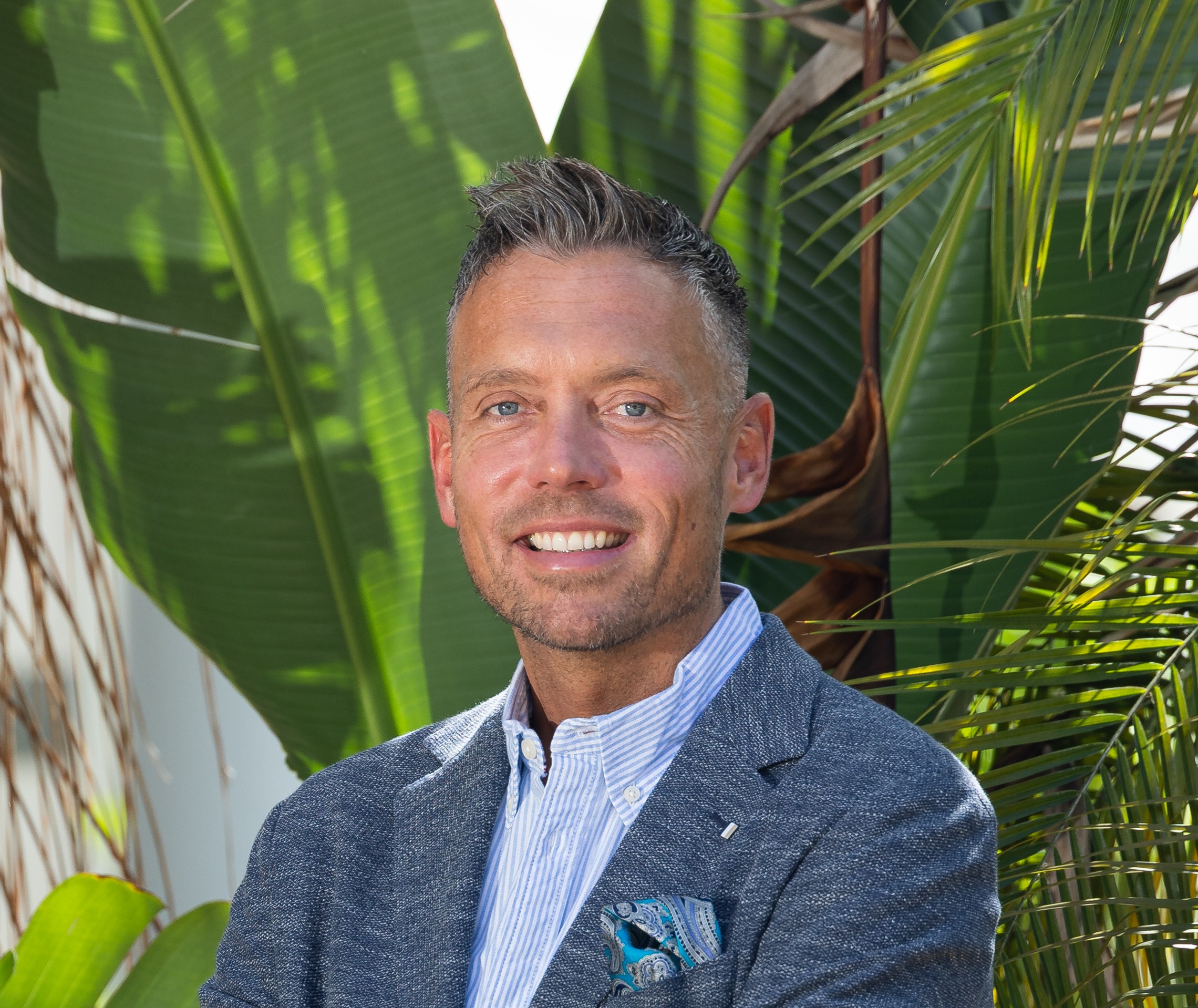
Article by
Scott Ward MBA CCMI
Scott Ward is the founder and CEO of Humanise Solutions, which he established three years ago to help organisations elevate their people, leadership and culture through a human-centric, evidence-based approach. Before moving into business and academia, Scott spent seven years as a professional footballer, playing for Luton Town, Crawley Town and Coventry City FC until injury brought his playing career to a close — a turning point that shaped both his research interests and his approach to leadership.
Scott holds an MBA from Warwick Business School, where his research explored the causal relationship between trauma and decision-making — work that continues to inform how he supports young adults, leaders and teams under pressure. Recognised as a Companion of the Chartered Management Institute (CCMI), its highest grade of membership, he combines academic rigour with the discipline, resilience and team-first mindset of the professional game. At the heart of everything he does is a simple belief: that people perform at their best when they are led, developed and valued as human beings first.
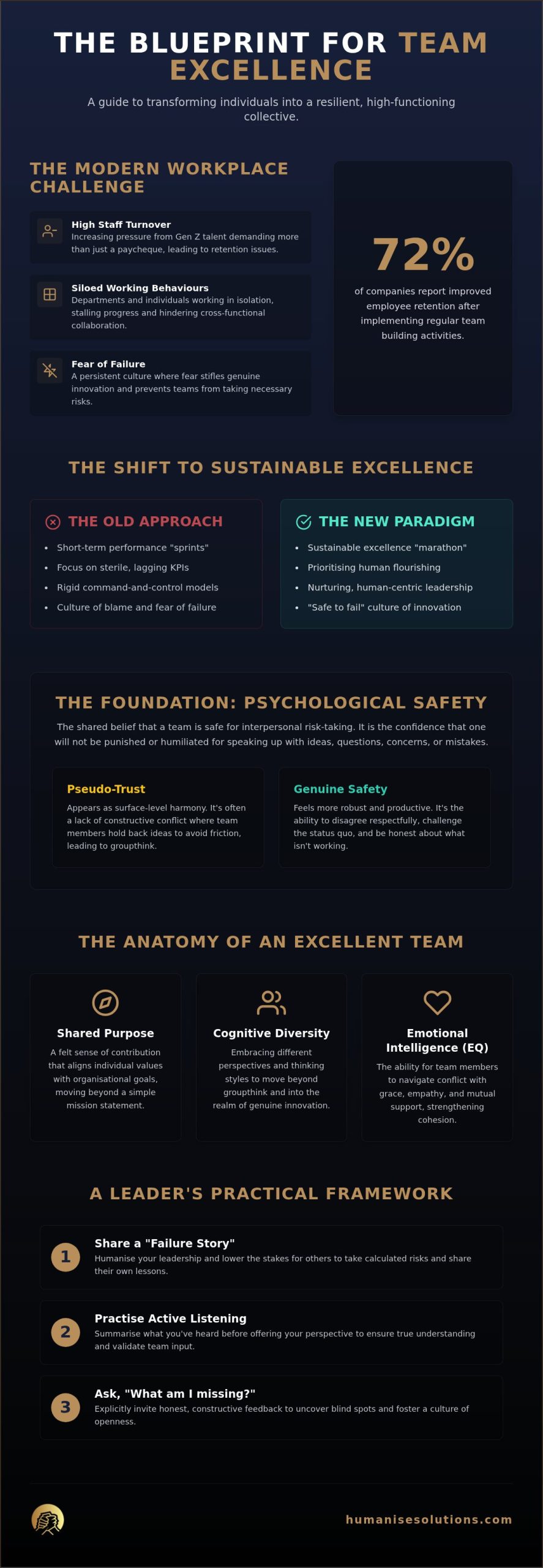
What if the secret to building team excellence isn’t found in your latest project management software, but in the quiet spaces between your colleagues’ conversations? You’ve likely felt the mounting pressure of high staff turnover amongst Gen Z talent or the frustration of siloed working behaviours that stall progress. With 72% of companies reporting improved employee retention through regular team building, it’s clear that connection matters, yet many leaders still find genuine innovation is stifled by a persistent fear of failure.
We understand that you want more than just functional output. You want a team that flourishes. This guide shows you how to transform a group of individuals into a high-functioning, resilient collective by prioritising psychological safety and human-centric growth. We’ll explore the shift from sterile corporate structures to nurturing leadership, providing a roadmap for sustainable high performance that protects your people from burnout whilst securing the long-term loyalty your organisation deserves.
Key Takeaways
- Shift from short-term performance “sprints” to sustainable excellence to protect your people from the hidden costs of burnout and high turnover.
- Cultivate psychological safety as the primary currency for building team excellence, ensuring every member feels secure enough to innovate and take risks.
- Implement a practical framework to audit your current team dynamics and establish a collective purpose that extends far beyond a simple mission statement.
- Move beyond sterile KPIs by adopting a nurturing leadership style that prioritises human flourishing and genuine social connection.
- Learn how to maintain momentum by treating team development as a continuous journey of cultivation rather than a one-off corporate event.
Defining Team Excellence: Moving Beyond KPIs
Excellence is often mistaken for a simple tally of successes. In many UK boardrooms, the focus remains stubbornly fixed on hitting quarterly targets, yet this narrow view misses the heartbeat of a truly high-performance team. True excellence isn’t just about high output; it’s about the ability to consistently exceed expectations whilst maintaining a culture of mutual support. High output can be a temporary sprint, often fuelled by adrenaline or fear, but it’s rarely sustainable. When we talk about building team excellence, we’re describing a marathon of collective flourishing where the people are as resilient as the results they produce.
Traditional KPIs often fail because they are lagging indicators. They tell you what happened, not why it happened or if it can happen again tomorrow. A team might meet every metric whilst suffering from toxic competition and silent silos. Nurturing leadership replaces the rigid command-and-control models of the past, focusing instead on the psychological health of the collective. It’s a shift from asking “did you do the work?” to “how can we grow together to do the work better?”. This transition requires a deep investment in human flourishing and a move away from the sterile language of traditional consulting.
The Anatomy of an Excellent Team
An excellent team operates with a shared purpose that aligns individual values with organisational goals. It’s not just a mission statement on a wall; it’s a felt sense of contribution. Cognitive diversity is equally vital. When teams embrace different perspectives, they move beyond groupthink and into genuine innovation. This cohesion is held together by emotional intelligence (EQ), which allows members to navigate conflict with grace and empathy. Without these human elements, even the most talented group of individuals will struggle to achieve lasting success.
Why Excellence Matters in 2026
As we look toward 2026, the demand for human-centric workplaces has never been higher. Gen Z talent, in particular, prioritises wellbeing and purpose over a simple paycheque. Building team excellence acts as a buffer against workplace stress and burnout, which are leading causes of turnover in the UK. Data suggests that 72% of companies have seen an improvement in employee retention after implementing regular team building activities, proving that investment in people is an investment in stability. By cultivating a culture of excellence, organisations see a direct impact on their bottom line through reduced recruitment costs and a more engaged, innovative workforce.
The Foundation: Cultivating Psychological Safety and Trust
Excellence doesn’t grow in a vacuum. It requires a specific environmental quality that allows individual talent to merge into a unified force. In the UK’s professional landscape, where workplace culture is often polite but guarded, trust serves as the primary currency for high-performing collectives. Psychological safety is the quiet confidence that one will not be punished or humiliated for speaking up with ideas, questions, concerns, or mistakes. It’s the difference between a team that merely complies and one that truly thrives.
Identifying the difference between pseudo-trust and genuine safety is critical for any leader. Pseudo-trust often looks like harmony, but it’s usually just a lack of conflict where people are “nice” yet hold back their best ideas or hide errors to avoid friction. Genuine safety feels more robust; it’s the ability to disagree, to challenge the status quo, and to be honest about what isn’t working. This is where nurturing leadership becomes the vital bridge between current tension and future potential.
Building Trust Through Vulnerability
Trust isn’t something you demand; it’s something you model. Leaders who are willing to share their own development journeys and admit when they don’t have all the answers create a fertile ground where others feel empowered to do the same. This involves building team cohesion through consistent, active listening and “radical candour” whilst maintaining a deeply supportive environment. By prioritising the human experience, you move away from sterile management and toward a partnership that is essential for building team excellence.
- Share a “failure story” in your next meeting to humanise your leadership and lower the stakes for others.
- Practice active listening by summarising what you’ve heard before offering your own perspective.
- Ask “What am I missing?” at the end of briefings to invite honest, constructive feedback.
Creating a “Safe to Fail” Culture
Moving from a blame culture to a learning culture requires a structural shift in how setbacks are handled. Instead of looking for a person to fault when things go wrong, focus on the process that allowed the error to occur. Implementing blameless post-mortems transforms a project setback into a collective learning opportunity, stripping away the fear that often stifles creative risk-taking. This approach ensures that the same mistake isn’t repeated and that the team grows stronger from every challenge. Psychological safety is the essential bedrock of innovation, providing the security needed for teams to explore new ideas without fear of retribution. When this safety is present, building team excellence becomes a natural progression rather than a forced demand.
Sustainable Excellence vs. Short-term High Performance
Speed is a seductive metric. Many UK organisations fall into the trap of praising high performance as an endless sprint, unaware that they are essentially borrowing productivity from the future at a high interest rate. This approach often results in a culture of toxic competition and mounting stress, where the hidden costs are found in high staff turnover and a lack of genuine innovation. Building team excellence requires a fundamental shift in perspective; it’s about marathon sustainability rather than short-term bursts. When a team is performing well but burning out, you’ll see sharp increases in irritability, a withdrawal from collaborative spaces, and a noticeable dip in creative problem-solving.
True excellence is not about “always being on,” despite what traditional consulting might suggest. It’s about creating a rhythm where high intensity is balanced with recovery. This sustainability is the only way to protect your most valuable asset: your people. Without this balance, even the most talented groups will eventually fracture under the weight of unrealistic expectations.
The Wellbeing-Performance Connection
Wellbeing is not a peripheral “perk” or a box-ticking exercise for HR. It is a non-negotiable prerequisite for cognitive performance. At Humanise Solutions, we view fostering wellbeing at work as a strategic growth lever, recognising that a mind under constant stress cannot access its full creative or analytical potential. Providing autonomy and flexible working structures doesn’t just improve morale; it builds the internal resilience necessary for long-term success. By investing in learning and development that prioritises the human element, organisations move away from sterile management and toward a model where people feel safe to bring their best selves to work every day. Teams that build a strong sense of community see employees 54% more likely to stay with the company longer, according to industry data from 2026.
Fostering Inclusive Excellence
True excellence is inherently inclusive. Evidence suggests that inclusive teams consistently outperform their peers, yet this goes beyond simple diversity quotas. It’s about fostering a genuine sense of belonging where every voice is heard and valued. We believe that women leadership plays a pivotal role in this balance, often bringing the emotional intelligence and collaborative focus essential for building team excellence. Moving beyond the detached consulting styles of the past means creating environments where diverse perspectives aren’t just present but are actively cultivated as the primary fuel for innovation. When people feel they truly belong, they don’t just work; they flourish.
A Practical Framework for Building Team Excellence
Moving from a theoretical understanding of psychological safety to a lived reality requires a structured, intentional approach. It’s about creating a rhythm of interaction that consistently reinforces trust and value. In the UK’s evolving work landscape, where 86% of employees cite ineffective communication as a primary cause for workplace failure, a clear roadmap is essential. This framework isn’t a rigid set of rules; it’s a living process designed to adapt to your team’s unique human dynamics whilst building team excellence from the ground up.
Step 1: The Human-Centric Audit
Before you can grow, you must understand your current soil. A human-centric audit moves beyond performance reviews to gauge the actual felt experience of your team members. Start by observing your meeting dynamics; notice who speaks up and, perhaps more importantly, who remains silent. Are ideas met with curiosity or immediate critique? You might ask your team: “On a scale of 1 to 10, how safe do you feel to share an unfinished idea?”. This step also involves identifying “culture add” rather than “culture fit.” Instead of looking for people who mirror your existing habits, look for those who bring new perspectives that challenge and expand your collective potential.
Step 2: Define Your Collective Purpose
Go beyond the corporate mission statement. Work together to define why your specific team exists and how your individual values align with that goal. This creates a sense of shared ownership that fuels long-term motivation.
Step 3: Implement Person-Focused Check-ins
Shift the focus of your one-to-ones. Dedicate the first ten minutes to the person, not the task. Asking “What’s energising you this week?” or “Where are you feeling stuck?” signals that you value their flourishing as much as their output.
Step 4: Investing in Nurturing Leadership
Generic, off-the-shelf training often fails because it ignores the specific social dynamics and individual needs of your workforce. Bespoke learning and development programmes succeed by addressing real-world challenges, such as the unique pressures faced by women leaders or the specific engagement needs of Gen Z talent. Nurturing leadership isn’t about managing tasks; it’s about cultivating the internal qualities of confidence and resilience in others. Engaging a specialist consultant can provide the objective, external perspective needed to identify blind spots and facilitate meaningful transformation. At Humanise Solutions, we specialise in creating these tailored pathways to help your organisation reach its full potential. Explore our bespoke nurturing leadership workshops to start your journey toward sustainable growth.
Step 5: Celebrate Learning Wins
Excellence is a journey of continuous refinement. When a project doesn’t go to plan, celebrate the insights gained just as much as you would a successful result. This reinforces a “safe to fail” culture and ensures that building team excellence remains a sustainable, rewarding process for everyone involved.
Sustaining Excellence through Human-Centric Development
Excellence isn’t a destination or a final tick in a box. It’s a continuous journey of cultivation. Unlike a one-off training course that ends with a certificate, building team excellence requires ongoing attention to the shifting dynamics of your group. As your organisation evolves and new talent joins, the social fabric of the team changes. This is why refreshing your team dynamics is vital. It’s an opportunity to re-evaluate psychological safety and ensure that the foundational trust we’ve discussed remains strong amidst change. A team that doesn’t adapt its culture as it grows risks falling back into the siloed behaviours that stifle innovation.
Future-proofing your team also means looking beyond traditional talent pools. In the UK, social mobility training is becoming a key differentiator for forward-thinking firms. By opening pathways for individuals from diverse socioeconomic backgrounds, you introduce fresh perspectives and resilience into your workforce. This isn’t just about corporate social responsibility; it’s a strategic move to ensure your team remains innovative and adaptable in an increasingly complex market. When you value diverse life experiences, you build a collective that is far more capable of navigating uncertainty.
Long-term Strategies for Leadership Growth
Creating a sustainable mentorship pipeline for young adults entering the workforce is essential for long-term stability. These early-career professionals bring energy and digital fluency, but they require a supportive environment to develop their professional confidence. Similarly, supporting women in leadership through targeted development tracks ensures that your leadership tier reflects the cognitive diversity needed for balanced decision-making. We believe that when you invest in the person, the professional results follow naturally. Nurturing the unique growth of every individual is the essential spark that ignites a team’s collective excellence.
The Humanise Solutions Approach
We move away from the sterile, detached language of traditional corporate consulting. Our approach is rooted in evidence-based, empathetic partnership, focusing on human flourishing as the primary driver of success. We don’t believe in fixing people; we believe in cultivating environments where they can thrive. Our workshops are designed to be nurturing experiences that build lasting resilience and psychological wellbeing. This steady, methodical pace mirrors our commitment to sustainable growth, ensuring your people feel supported rather than overwhelmed.
By partnering with Humanise Solutions, you’re choosing a path of sustainable growth and inclusive development. We help you transition from high-pressure sprints to a steady, excellent marathon. If you’re ready to move beyond KPIs and start building team excellence that lasts, we’re here to guide you. Discover our bespoke team excellence workshops and take the first step towards a more human-centric future for your organisation.
Cultivating a Legacy of Collective Growth
The transition from a sterile corporate environment to a thriving, human-centric collective doesn’t happen by accident. It requires a deliberate shift in focus from short-term output to the long-term flourishing of your people. By prioritising psychological safety and moving beyond traditional KPIs, you create a space where innovation isn’t just encouraged; it’s inevitable. We’ve explored how building team excellence is a continuous journey of cultivation, requiring a commitment to sustainability that protects your colleagues from the fatigue of endless sprints.
At Humanise Solutions, we use an evidence-based methodology to help you navigate this vital transformation. Our bespoke designs for women and young adults ensure that every member of your team has a clear path to leadership and personal growth. By focusing on long-term sustainability, we ensure your cultural progress is resilient and lasting. Elevate your team with our bespoke excellence programmes and begin the rewarding work of transforming your workplace dynamics today. The potential within your people is vast; it’s time to provide the environment where they can truly shine.
Frequently Asked Questions
What is the first step in building team excellence?
The first step is conducting a thorough human-centric audit to understand the current state of psychological safety and social connection within your group. This involves looking beyond surface-level metrics to see how people actually interact during moments of pressure. By identifying existing barriers to trust, you can create a baseline for future growth that is rooted in reality rather than assumption.
How long does it take to see results from a team excellence programme?
You can expect to see initial shifts in communication and engagement within the first three to six months of a dedicated programme. However, building team excellence is a long-term commitment to cultural evolution rather than a quick fix. Sustainable results emerge as new behaviours become embedded in daily interactions, eventually leading to a measurable reduction in turnover and an increase in collaborative innovation.
Can team excellence be built in a remote or hybrid environment?
Yes, excellence can be cultivated in remote and hybrid settings by prioritising intentional connection over incidental office interactions. Whilst 82% of companies have encouraged a return to in-person work to rebuild trust, hybrid models can thrive if leaders create dedicated digital spaces for vulnerability and non-task-related dialogue. Success in these environments depends on maintaining clear, empathetic communication that bridges the physical distance between team members.
What is the difference between team building and building team excellence?
Team building is often a discrete, one-off event designed for entertainment or short-term bonding; building team excellence is the continuous process of creating a sustainable environment where high performance is a natural byproduct. Whilst an afternoon activity can boost morale, true excellence involves deep structural changes to leadership styles and psychological safety. It moves the focus from having fun together to flourishing together through shared purpose and mutual support.
How do I measure team excellence without relying solely on KPIs?
You can measure excellence by tracking qualitative indicators such as employee retention rates, the frequency of learning wins shared in meetings, and regular psychological safety assessments. Observation is also a powerful tool; notice if team members are willing to challenge ideas or admit mistakes without hesitation. These human-centric metrics provide a more accurate picture of your team’s long-term health than traditional financial targets alone.
Why is psychological safety so important for high-performing teams?
Psychological safety is essential because it removes the fear of failure that typically stifles creativity and honest communication. When people feel secure enough to take risks, they are more likely to propose the innovative solutions that drive organisational success. Without this foundation, teams often fall into groupthink or hide critical errors, both of which are detrimental to sustained high performance and collective growth.
How can I support young adults in my team to reach excellence?
Supporting young adults involves providing clear mentorship pipelines and creating an environment that values their specific perspectives on digital innovation and social purpose. Given that Gen Z talent often prioritises wellbeing, leaders should offer regular feedback and opportunities for professional development that feel personally meaningful. Addressing social mobility also ensures that talent from all backgrounds has the support needed to navigate the nuances of the professional world.
What role does wellbeing play in organisational leadership development?
Wellbeing serves as the strategic foundation for leadership development, as a mind under constant stress cannot effectively lead or inspire others. When organisations prioritise the mental and emotional health of their leaders, they foster a more resilient and empathetic leadership tier. This human-centric approach ensures that development is sustainable, preventing burnout and creating a ripple effect of flourishing throughout the entire team.