

Article by
Scott Ward MBA CCMI
Scott Ward is the founder and CEO of Humanise Solutions, which he established three years ago to help organisations elevate their people, leadership and culture through a human-centric, evidence-based approach. Before moving into business and academia, Scott spent seven years as a professional footballer, playing for Luton Town, Crawley Town and Coventry City FC until injury brought his playing career to a close — a turning point that shaped both his research interests and his approach to leadership.
Scott holds an MBA from Warwick Business School, where his research explored the causal relationship between trauma and decision-making — work that continues to inform how he supports young adults, leaders and teams under pressure. Recognised as a Companion of the Chartered Management Institute (CCMI), its highest grade of membership, he combines academic rigour with the discipline, resilience and team-first mindset of the professional game. At the heart of everything he does is a simple belief: that people perform at their best when they are led, developed and valued as human beings first.
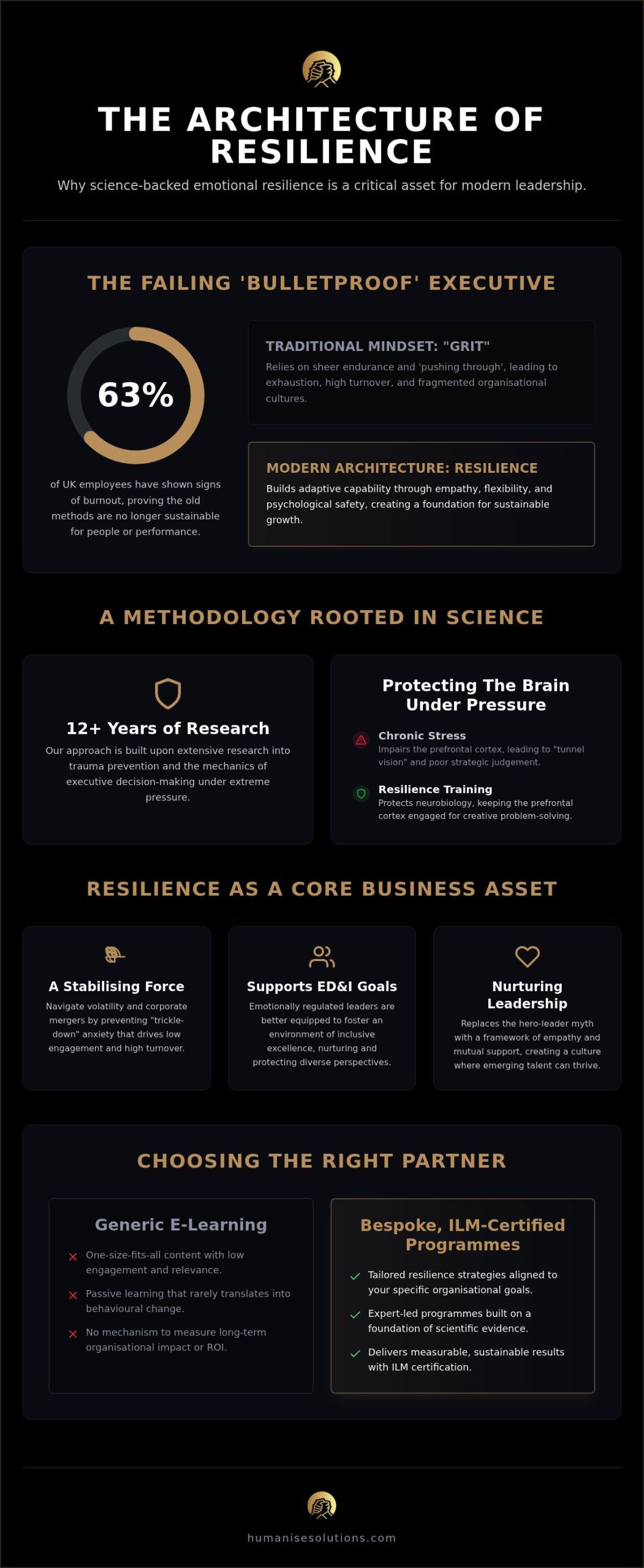
The traditional image of the ‘bulletproof’ executive is failing our businesses, leaving behind a trail of exhaustion and fragmented cultures. You likely recognise the weight of this reality, as recent data indicates that 63% of UK employees have shown signs of burnout. It’s clear that the old methods of simply ‘pushing through’ are no longer sustainable for your people or your performance. This is why emotional resilience training for leaders has evolved from an optional workshop into a critical piece of organisational architecture.
At Humanise Solutions, we believe that true excellence is nurtured through empathy and evidence-based confidence. We’ll show you how science-backed resilience training transforms leadership from a source of pressure into a foundation for sustainable growth and psychological safety. You’ll discover how to bridge the gap between fragmented teams and high-performing cultures, ensuring your leadership style resonates with everyone from senior partners to emerging Gen Z talent. We’ll explore the methodology of building adaptive capability, moving beyond simple endurance towards a future of inclusive excellence.
Key Takeaways
- Discover how science-backed emotional resilience training for leaders leverages 12 years of research into trauma prevention to protect executive decision-making under pressure.
- Learn why shifting from traditional “grit” to a nurturing leadership model is essential for reducing burnout and fostering a culture of psychological safety.
- Identify the critical differences between generic e-learning and bespoke, ILM-certified programmes that deliver measurable, long-term organisational results.
- Explore how to implement tailored resilience strategies across diverse teams, specifically addressing the needs of women leaders and the engagement of younger talent.
- Understand the “Leading Architecture” framework, which ensures your development programmes are precisely aligned with your unique organisational goals and human potential.
What is Emotional Resilience Training for Leaders?
In the high-stakes environment of executive boardrooms, Psychological resilience is often misunderstood as a static personality trait or a simple measure of “toughness”. We define it differently. At Humanise Solutions, we view emotional resilience as the sophisticated ability to navigate intense pressure whilst maintaining personal psychological well-being and a commitment to inclusive leadership. It’s not about being unshakeable; it’s about possessing the cognitive and emotional tools to return to a state of balance after a period of significant challenge. We define resilience as a dynamic leadership architecture rather than a fixed trait.
Traditional “grit” is increasingly insufficient in modern, complex organisational environments. Whilst grit focuses on sheer endurance, modern leadership requires flexibility, empathy, and the capacity to make sound decisions amidst ambiguity. It’s vital to distinguish between clinical mental health treatment, which we don’t provide, and the professional development training that equips leaders to flourish. Our emotional resilience training for leaders focuses on the latter, providing the skills needed to lead with confidence without sacrificing one’s health or humanity.
The Shift from Endurance to Nurturing Leadership
The “endure at all costs” mindset has far-reaching consequences that extend beyond the boardroom. This culture of exhaustion contributes to wider societal challenges, including the 31% of young people who are Not in Education, Employment, or Training (NEET) citing mental health barriers as a primary obstacle to work. When leaders model self-neglect, they inadvertently create a culture of burnout that alienates emerging talent. Our Nurturing Leadership model serves as the antidote. It replaces the hero-leader myth with a framework of empathy, showing that high-performing teams are built on psychological safety and mutual support rather than fear and fatigue.
Why Resilience is a Strategic Business Asset
Resilience is a core component of sustainable growth. Resilient leaders act as a stabilising force during volatile periods, such as the fragmented culture often found in the wake of corporate mergers. By managing their own stress responses, leaders can prevent the “trickle-down” anxiety that often leads to low engagement and high staff turnover. Beyond this, emotional resilience training for leaders directly supports Equality, Diversity, and Inclusion (ED&I) goals. Leaders who are emotionally regulated are better equipped to foster an environment of inclusive excellence, ensuring that diverse perspectives are not just invited but are actively nurtured and protected within the organisation.
The Science of Resilience: Trauma Prevention and Decision-Making
Understanding the mechanics of high performance requires more than just observation; it demands a deep dive into the biological and psychological drivers of human behaviour. Humanise Solutions brings over 12 years of research into decision-making processes and trauma prevention to the forefront of our work. Led by Serena Kersten (MBE), an expert in workplace psychology, and CEO Scott Ward, our methodology is rooted in the reality of how leaders function under extreme duress. This scientific rigour ensures that our emotional resilience training for leaders is not merely aspirational but deeply practical.
When chronic stress becomes the default setting, the body’s physiological response begins to actively impair executive function. The prefrontal cortex, which governs logical reasoning and complex problem-solving, can become overwhelmed by the brain’s more primitive survival centres. This shift often results in “tunnel vision,” where leaders lose the ability to see the broader strategic picture. By integrating Resilient Leadership techniques, we help individuals recognise these physiological triggers before they dictate their actions.
Understanding the Brain Under Pressure
Maintaining belief during periods of intense transition is a cognitive challenge as much as an emotional one. Our “Personal Resilience” modules are designed to protect the neurobiology of leadership, ensuring that the prefrontal cortex remains engaged even when the stakes are at their highest. This focus on emotional intelligence allows for more creative problem-solving and prevents the reactive decision-making that often characterises a stressed culture. It’s about building an internal infrastructure that supports cognitive clarity when it’s needed most.
Trauma Prevention in the Workplace
We view trauma prevention as a proactive leadership skill rather than a reactive necessity. In a professional context, this means breaking the “burnout cycle” by identifying developmental needs and skill gaps before they escalate into organisational crises. By fostering a human-centric experience rooted in psychological safety, leaders can create an environment where teams feel empowered to innovate without the fear of failure. This approach doesn’t just protect the individual; it secures the long-term health of the entire business. If you’re looking to integrate these research-backed strategies into your organisation, we invite you to connect with our team to explore a tailored approach.
Comparing Traditional Coaching vs. Human-Centric Resilience Training
Many organisations fall into the trap of relying on generic, “off-the-shelf” e-learning modules to address complex human challenges. These static platforms often feel sterile, failing to capture the nuance of a leader’s daily pressures or the specific dynamics of their team. In contrast, our bespoke, research-backed programmes are built on the understanding that every leadership cohort is unique. By prioritising a human-centric approach, we focus on the individual leader’s flourishing as the primary driver for elevating the entire collective. This isn’t about ticking a box; it’s about creating a sustainable foundation for excellence.
The value of ILM-certified workshops cannot be overstated when compared to non-accredited “motivational” talks. Whilst a speaker might provide a temporary boost in morale, they rarely offer the rigorous framework needed for long-term growth. Our emotional resilience training for leaders bridges this gap by combining high-level inspiration with academic accreditation. To prioritise depth, we often supplement group workshops with 1-1 coaching, providing a private space for leaders to explore personal challenges and refine their specific Learning & Development goals.
Why Bespoke Learning Design Matters
A “one-size-fits-all” strategy ignores the diverse requirements of different industries and seniorities. We provide dedicated learning design support to ensure every session is structured around achieving client-driven outcomes. We also recognise the time constraints on modern executives. Offering half-day certified workshops instead of full-day sessions allows for intense, focused development that fits into a busy schedule without causing further stress. This methodical pace ensures that the lessons are absorbed and integrated rather than simply delivered.
Evidence-Based Outcomes
We hold ourselves to the highest standards of delivery, a commitment reflected in our 9.98% feedback rating from previous participants. This level of excellence is supported by the Science of Resilience in Leadership, which highlights how structured, evidence-based interventions are essential for navigating organisational complexity and crises. Our 100% completion rate across our programmes demonstrates that when training is engaging and relevant, leaders remain deeply invested in their growth. This investment leads to a tangible shift in organisational behaviours, moving the culture towards one of shared confidence and psychological safety.
Implementing Resilience Across Diverse Leadership Cohorts
Resilience isn’t a generic solution to be applied uniformly across an organisation. To be truly effective, emotional resilience training for leaders must acknowledge and address the unique pressures faced by different demographics. Inclusive leadership is built on this understanding, ensuring that every individual feels a genuine sense of belonging whilst navigating professional challenges. By integrating inclusive practices into resilience frameworks, we help leaders identify and dismantle the subtle biases that often hinder diverse teams. This doesn’t just improve team harmony; it’s a strategic necessity for fostering innovation and preventing the high turnover rates associated with exclusive or rigid cultures. This approach transforms the workplace from a site of friction into a space of shared potential and mutual respect.
Cultivating Confidence in Women Leaders
Our Women Leadership ILM Programme focuses on the specific hurdles women encounter within global corporate structures. One of the most prevalent challenges is the experience of “Imposter Syndrome,” which can significantly erode a leader’s confidence during high-stakes transitions. We address this through targeted emotional intelligence modules that help participants reframe internal narratives and own their achievements. Mentoring plays a vital role here; we encourage a “pay it forward” culture where established leaders support emerging talent, creating a sustainable pipeline of resilient female executives who lead with authenticity and strength. These programmes are specifically designed to ensure the architecture of their development is as robust as it is empathetic.
Nurturing the Next Generation: Young Adult Resilience
The transition into the professional world is particularly daunting for young adults, especially with 31% of NEETs identifying mental-health barriers as a primary obstacle to employment. Engaging Gen Z requires a shift from traditional, “stiff” leadership towards a more empathetic, human-centric model. Our young adult programmes are designed to provide the mindset toolkits and personal branding skills necessary for early-career success. By utilising our matrix partner system, we offer a supportive journey into the workforce, ensuring that the next generation of talent is equipped with the resilience needed to flourish in a complex environment.
Building a resilient organisation starts with a commitment to understanding the diverse needs of your people. If you’re ready to develop a leadership culture that is both inclusive and high-performing through emotional resilience training for leaders, we invite you to speak with our specialists today about our bespoke training options.
Choosing a Resilience Partner: Humanise Solutions’ Approach
Selecting the right partner for emotional resilience training for leaders requires a shift in perspective. It’s not about finding a vendor; it’s about identifying a guide who understands that leadership development is a form of organisational architecture. At Humanise Solutions, we don’t offer generic advice. We build bespoke frameworks designed to unlock human potential whilst protecting psychological well-being. This commitment is backed by a multi-million-pound infrastructure, a resource built from our unique background in elite sport and high-level corporate consulting. We invite you to explore our services to see how these tailored leadership tracks can transform your current challenges into future strengths.
A Holistic Matrix of Support
Our approach is defined by a methodical and thorough support system. We begin with a three-day onboarding process, a deliberate pace that ensures every participant feels supported rather than overwhelmed. During this time, we co-create personal action plans that align individual growth with organisational goals. Our status as the 5th largest digital recruiter in EMEA provides a perspective that few others possess, allowing us to view leadership through the lens of a complete talent pipeline. This strategy is spearheaded by specialists like Serena Kersten and CEO Scott Ward, who bring a sophisticated blend of workplace psychology and trauma-informed leadership to every partnership. They don’t just dictate from a distance; they act as invested partners in your journey of development.
Sustaining Growth Through Continuous Development
Resilience is not a destination. It is a quality that must be nurtured through consistent practice and Continuing Professional Development (CPD). We ensure that the principles of emotional resilience training for leaders are woven into the daily fabric of your business. Our “Team Days” and “High Performing Teams” workshops are designed to reinforce resilient behaviours amongst all staff, not just the executive suite. These sessions move beyond theory, focusing on the practical application of empathy and inclusive excellence in real-world scenarios. By prioritising this steady progression, you create a culture where unique abilities are celebrated and psychological safety is the norm. We are here to help you elevate your people, your leadership, and your culture for long-term, sustainable success.
Building a Future of Sustainable Leadership Excellence
The transition from a culture of stress to one of sustainable growth is not achieved through grit alone; it requires a deliberate, science-driven architecture. By integrating over 12 years of trauma-prevention research into our ILM-certified programmes, we provide leaders with the cognitive tools to navigate complexity whilst fostering psychological safety. Whether you’re supporting women in global corporate tracks or engaging emerging Gen Z talent, the right framework ensures that every individual can flourish.
Our emotional resilience training for leaders is designed to move beyond traditional endurance, focusing instead on the human-centric qualities that drive long-term retention and performance. With a 9.98% feedback rating for our programme delivery, we’ve seen first-hand how evidence-based confidence transforms organisational culture. It’s about moving from a state of survival to a future of inclusive excellence where potential is unlocked at every level.
Elevate your leadership with bespoke resilience training and begin the journey of unlocking your team’s true potential today. True leadership is a journey of continuous nurturing, and we’re here to partner with you every step of the way.
Frequently Asked Questions
What is emotional resilience training for leaders?
It is a structured development programme designed to equip executives with the psychological tools needed to navigate complexity and pressure. Unlike generic coaching, it focuses on the neurobiology of leadership, helping individuals maintain cognitive clarity and inclusive excellence during transitions. This training shifts the focus from simple endurance to a nurturing leadership model, ensuring that leaders can support their own wellbeing whilst effectively guiding their teams through significant organisational change.
How does resilience training improve team performance?
Resilience training creates a foundation of psychological safety, allowing teams to innovate without the fear of failure. When leaders possess high emotional intelligence, they can identify skill gaps and developmental needs before they escalate into crises. This proactive approach reduces the “trickle-down” stress that often leads to burnout and high staff turnover. By fostering a culture of mutual support, organisations can achieve sustainable high performance and more effective post-merger integration.
Is emotional resilience a soft skill or a hard skill?
We view emotional resilience as a critical leadership capability that bridges the gap between traditional “soft” skills and technical “hard” skills. Whilst it involves empathy and self-awareness, it is rooted in 12 years of scientific research into decision-making and trauma prevention. This makes it a measurable, strategic asset. Developing this capability allows leaders to maintain belief during periods of intense volatility, ensuring they can make logical, evidence-based decisions under significant pressure.
Can emotional resilience be taught in a corporate setting?
Yes, emotional resilience is a dynamic architecture that can be cultivated through targeted, professional development tracks. Our ILM-certified workshops use bespoke learning design to ensure the training is directly aligned with specific organisational goals. By moving away from clinical interventions and focusing on professional growth, we help corporate leaders build practical toolkits. These toolkits include strategies for managing time effectively, resolving conflict, and overcoming imposter syndrome within a high-stakes business environment.
What is the difference between resilience and stress management?
Stress management often focuses on reactive techniques to reduce current tension, whereas emotional resilience training for leaders is a proactive, long-term strategy. Resilience involves building an internal infrastructure that allows a leader to adapt to and grow from challenges rather than just surviving them. It incorporates elements of trauma prevention and emotional intelligence, enabling individuals to maintain their performance and wellbeing even when stressors are persistent, complex, or unpredictable.
How do Humanise Solutions’ ILM programmes support leader development?
Our ILM-certified leadership programmes provide a rigorous, accredited framework for professional growth. These initiatives go beyond simple “motivational” sessions by offering structured modules on leading and managing change, mentoring, and optimising team performance. Participants benefit from a human-centric approach that celebrates unique abilities and individual potential. This methodical development is supported by a 9.98% feedback rating, ensuring that the training is both engaging and effective for global corporate leaders and elite sport organisations.
Why is trauma prevention important for executive leadership?
Trauma prevention is essential because chronic executive stress can lead to a cycle of burnout that affects the entire organisation. Our research indicates that 31% of NEETs cite mental-health barriers as a reason for not working, often reflecting a wider culture of leadership exhaustion. By identifying developmental needs early and fostering a human-centric experience, leaders can prevent professional setbacks from becoming deep-seated crises. This proactive care ensures long-term sustainability for both the individual and the business.
How long does a typical resilience workshop last?
We offer flexible delivery options to suit the demanding schedules of modern executives, including half-day and full-day certified workshops. These sessions are supported by bespoke learning design to ensure maximum impact within a condensed timeframe. For deeper integration, we also provide a structured three-day onboarding process and 1-1 coaching. This methodical pace allows leaders to absorb the emotional resilience training for leaders and apply it immediately to their specific professional context.
