

Article by
Scott Ward MBA CCMI
Scott Ward is the founder and CEO of Humanise Solutions, which he established three years ago to help organisations elevate their people, leadership and culture through a human-centric, evidence-based approach. Before moving into business and academia, Scott spent seven years as a professional footballer, playing for Luton Town, Crawley Town and Coventry City FC until injury brought his playing career to a close — a turning point that shaped both his research interests and his approach to leadership.
Scott holds an MBA from Warwick Business School, where his research explored the causal relationship between trauma and decision-making — work that continues to inform how he supports young adults, leaders and teams under pressure. Recognised as a Companion of the Chartered Management Institute (CCMI), its highest grade of membership, he combines academic rigour with the discipline, resilience and team-first mindset of the professional game. At the heart of everything he does is a simple belief: that people perform at their best when they are led, developed and valued as human beings first.
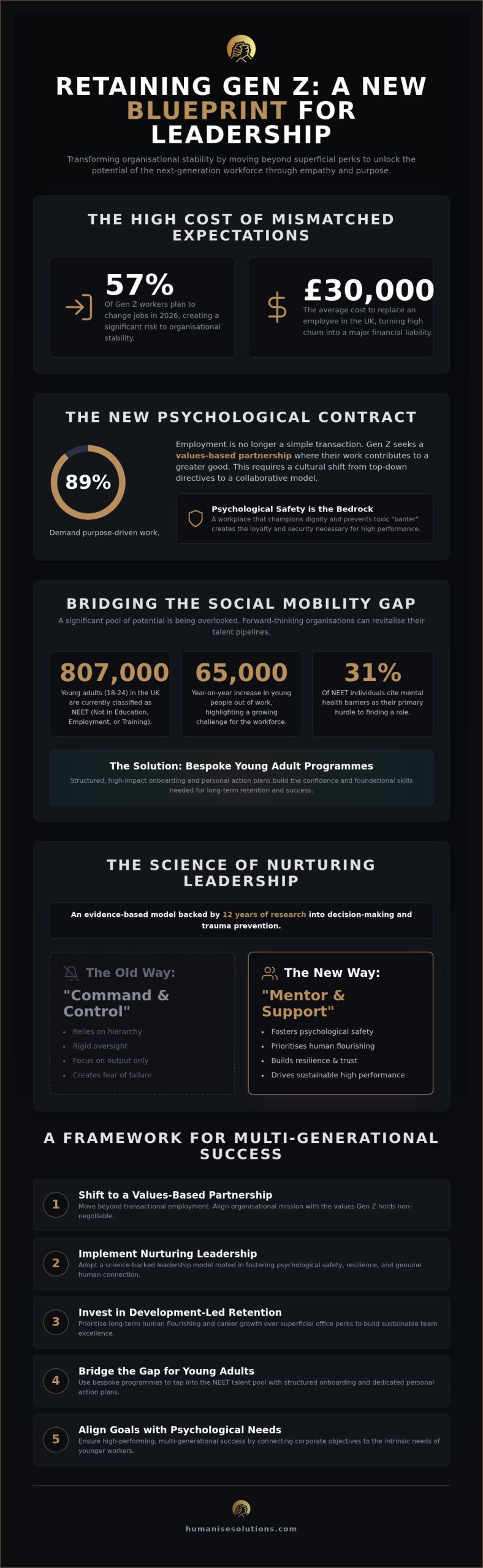
Did you know that 57% of Gen Z workers plan to change jobs in 2026? With the average cost to replace a UK employee reaching up to £30,000, this level of early-career churn is no longer just an HR headache; it’s a fundamental threat to your organisational stability. Developing a successful retaining gen z talent strategy requires more than superficial perks. It demands a shift towards leadership that prioritises psychological well-being and genuine human connection.
You’ve likely felt the frustration of watching bright, young professionals walk out the door just as they’re starting to hit their stride. It’s exhausting to constantly recruit for the same roles while wondering why your corporate goals aren’t resonating with the newest generation. This guide will show you how to transform your culture through evidence-based nurturing leadership and bespoke development programmes. We’ll explore the scientific foundations of trauma-informed management, the necessity of holistic wellbeing, and how to bridge the gap for the 807,000 young people currently classified as NEET to create a stable, high-performing multi-generational workforce.
Key Takeaways
- Understand why purpose-driven work is a non-negotiable requirement for Gen Z, allowing you to shift your organisational culture from transactional employment to a values-based partnership.
- Implement a science-backed retaining gen z talent strategy rooted in Nurturing Leadership, which uses 12 years of research to foster psychological safety and resilience.
- Move past superficial perks by investing in development-led retention that prioritises long-term human flourishing and sustainable Team Excellence.
- Discover how bespoke Young Adult Programmes can bridge the gap for the 807,000 NEET individuals entering the workforce through structured, high-impact onboarding and personal action plans.
- Learn to leverage your status as a top employer by aligning corporate goals with the psychological needs of younger workers to ensure high-performing, multi-generational success.
Understanding the Gen Z Psychological Contract in 2026
The relationship between employer and employee has undergone a radical transformation. For the newest members of the workforce, employment is no longer a simple transaction of time for money. Understanding Generation Z involves recognising their desire for values-based partnerships. Data suggests that purpose is a non-negotiable factor for 89% of these young workers. They want to know their labour contributes to a greater good. A modern retaining gen z talent strategy must pivot away from top-down directives toward a collaborative model that respects individual agency. Integrating these human-centric values into your culture ensures your organisation remains competitive as the workforce evolves.
The Social Mobility Gap and Talent Retention
The UK currently faces a widening gap in social mobility that impacts every sector. Business constraints show that 807,000 young adults, or 4.5% of 18-24-year-olds, are currently classified as NEET. This group is expanding, highlighted by a 65,000 year-on-year increase in young people out of work. We must address the fact that 31% of NEET individuals cite mental health barriers as their primary hurdle to finding a role. Forward-thinking organisations can bridge this divide by offering Young Adult Programmes that focus on foundational skills. Helping new hires with the basics of navigating the job market builds the confidence needed for long-term retention. By viewing these individuals as a pool of untapped potential rather than a statistic, leaders can revitalise their talent pipelines and foster genuine loyalty from day one.
Psychological Safety: The Bedrock of Loyalty
True loyalty stems from a feeling of safety and respect. Psychological safety is often misunderstood as a lack of accountability, but it’s actually about the prevention of “banter” that crosses the line into bullying. Gen Z professionals prioritise dignity at work above almost all other factors. They won’t commit to a brand that allows toxic social dynamics to persist under the guise of office culture. This generation’s focus on mental health is a demand for professional sustainability. They seek leaders who understand the nuances of social dynamics and provide a secure environment for all. A workplace that champions dignity creates a culture of excellence where high performance is a natural byproduct of feeling valued. The Gen Z psychological contract is a commitment to mutual growth and wellbeing.
The Science of Nurturing Leadership as a Retention Tool
Retention isn’t a byproduct of luck; it’s a result of intentional, scientific leadership. Humanise Solutions has dedicated 12 years of research into decision-making and trauma prevention to understand what truly drives human flourishing in the workplace. This evidence-based approach is the foundation of Nurturing Leadership. Unlike traditional management styles that often rely on hierarchy and rigid oversight, this model focuses on the psychological needs of the individual. By shifting the focus from output to the person behind the output, organisations can significantly reduce the churn of young professionals who crave authentic connection. A robust retaining gen z talent strategy recognises that when people feel seen and supported, their commitment to the organisation deepens naturally.
Evidence-Based Decision Making in Leadership
Managing the expectations of a new generation requires more than intuition. It requires an understanding of human behaviour and the biases that often cloud our judgment. Traditional “Command and Control” behaviours are being replaced by “Mentor and Support” roles. This transition is backed by scientific insights into how we process information and make decisions under pressure. By implementing unconscious bias training, leaders can create a truly inclusive environment where every voice is heard. This isn’t just about fairness; it’s about making better decisions for the collective. Understanding these social dynamics allows you to refine your leadership approach to meet the specific needs of your team.
Trauma Prevention and Resilience at Work
Modern leadership must account for the emotional wellbeing of its workforce. Trauma prevention is a critical, yet often overlooked, component of professional development. For many young adults, the transition into a high-pressure corporate environment can be overwhelming. By utilising a Mindset and Attitude Tool Kit, leaders can help their teams build personal resilience. This isn’t about toughening people up; it’s about providing the emotional intelligence and tools needed to navigate workplace transitions with confidence. Fostering a growth-oriented culture through these toolkits ensures that challenges are viewed as opportunities for development rather than sources of distress. This proactive stance on wellbeing is what separates visionary organisations from those struggling with high turnover.
Moving Beyond Surface Perks to Sustainable Team Excellence
Traditional corporate perks like free fruit or gym memberships often feel like a sticking plaster on a deeper wound. Whilst these benefits are pleasant, they don’t address the fundamental reason why young professionals leave. A truly effective retaining gen z talent strategy focuses on “Development-led” retention. This approach recognises that Gen Z workers value growth and meaningful contribution far more than surface-level incentives. Sustainable Team Excellence isn’t something you can buy through a SaaS platform or a subscription service. It’s the result of human-centric training that builds internal qualities like confidence and resilience. By prioritising Equality, Diversity, and Inclusion (ED&I) as a core pillar, organisations create a sense of belonging that is essential for loyalty. Humanise Solutions’ Inclusive Leadership programmes, for instance, boast 100% completion rates because they are deeply invested in the human experience.
Cultivating a Culture of Continuous Learning
Continuous growth is the heartbeat of a loyal workforce. CPD, or Continuing Professional Development, isn’t just a box-ticking exercise; it’s a promise of future potential. When leaders take the time to identify skill gaps, they empower young employees to see a long-term career path within the firm. This proactive approach transforms the workplace into an incubator for talent. By linking these efforts to bespoke learning and development programmes, organisations can support smooth career transitions and ensure their staff feel genuinely equipped for the challenges of 2026. It’s about building a bridge between current abilities and future aspirations.
Wellbeing as a Strategic Growth Driver
We must move beyond simple mental health awareness and start actively fostering wellbeing as a daily practice. It’s a shift from reactive care to proactive cultivation. Modules focused on stress awareness and avoiding burnout are essential to protect your talent pipelines from early-career exhaustion. These initiatives shouldn’t be viewed as optional extras but as strategic growth drivers that ensure the long-term sustainability of your team. For a deeper look at this philosophy, explore Fostering Wellbeing: A Guide to Human-Centred Growth. When wellbeing is woven into the fabric of the organisation, it creates a resilient culture where high performance and psychological health coexist harmoniously. This steady focus on the human element is what builds a reputation as a top employer.
Designing a Bespoke Young Adult Professional Development Strategy
Creating a robust framework for early careers isn’t just about onboarding; it’s about architecting a journey of growth. The first three days of an Early Careers Development Programme represent a vital window where the psychological contract is either solidified or strained. During this period, we focus on personal action plans and the initial job network set-up to ensure every individual feels a sense of immediate purpose. A sophisticated retaining gen z talent strategy must look beyond the first week, integrating these entry-level paths with the organisation’s broader succession planning. This ensures that as your young talent grows, they’re stepping into roles that have been carefully prepared for their unique strengths. Tailored Learning Design Support is essential here, as it helps bridge the gap between different generations, ensuring that training is accessible and impactful for everyone.
Essential Skills for the Modern Young Professional
We prioritise skills that allow young adults to thrive within a corporate structure while maintaining their individuality. These aren’t just technical competencies; they’re the human qualities that drive long-term success. Key areas of focus include:
- Communication and Facilitation: Building the confidence to lead discussions and articulate complex ideas clearly amongst peers and seniors.
- Presentation Skills: Mastering the art of presence and storytelling to deliver information with impact in a professional context.
- Entrepreneurial Mindsets: Encouraging intrapreneurship where employees take ownership of their projects and feel empowered to innovate within their roles.
- Giving and Receiving Feedback: Normalising open dialogue as a mechanism for rapid, continuous improvement and psychological safety.
The Role of Mentoring and Support Networks
Mentorship shouldn’t be a one-way street. Our “How to Become an Effective Mentor” programmes are designed to benefit both the Gen Z participant and the senior leader, fostering mutual understanding and shared growth. We utilise a “Matrix System” approach, which provides a layered support structure to guide each participant’s journey into employment. This system ensures that no one is left to navigate the complexities of a new role alone, providing multiple touchpoints for guidance and reassurance. By investing in these human-centric structures, you’re not just filling a vacancy; you’re cultivating a future leader. Explore our dedicated young adult programmes for tailored support that meets these specific developmental needs.
If you’re ready to transform your approach to early careers and build a more resilient workforce, contact our experts to discuss a bespoke strategy for your organisation.
Elevating Your Organisation with Human-Centric Talent Management
Humanise Solutions doesn’t just consult from the sidelines; we act as a dedicated partner in your journey of Change & Transformation. By aligning leadership behaviours with the psychological needs of your staff, we help facilitate the deep culture shifts required for long-term success. Our authority in this space is underpinned by our position as the 5th largest digital recruiter in EMEA, giving us an unparalleled view of the end-to-end talent pipeline. This expertise allows us to design structured development that achieves between 50% and 80% job outcomes for participants. When we talk about elevating people, leadership, and culture, we back it up with a 9.98/10 feedback rating for our delivery. This isn’t just about filling roles; it’s about refining your retaining gen z talent strategy to ensure every hire is an investment in your firm’s future flourishing.
Measuring the Impact of Nurturing Leadership
Measuring the tangible impact of these shifts is vital for any leadership team. We track performance improvement and organisational behaviours post-training to ensure the growth we cultivate is sustainable and rooted in logic. The ROI of our Leadership ILM Programmes is often seen in the significant reduction of turnover costs as young professionals find genuine reasons to stay and grow. By celebrating the unique abilities of each individual, we drive growth that benefits both the person and the firm. It’s a methodical approach that transforms the workplace from a revolving door into a stable centre of excellence where resilience is a shared trait. We believe that when you invest in the human experience, the business results follow naturally.
Your Next Steps Towards Talent Excellence
Your path towards talent excellence begins with a bespoke learning journey tailored to your specific goals. Whether you’re managing a global corporate structure or navigating the complexities of post-merger success, Nurturing Leadership provides the stability and trust needed to keep teams aligned. This model ensures that even during times of significant transition, the human element remains at the heart of your strategy. This steady pace of development builds trust and ensures your leaders feel supported rather than overwhelmed. If you’re ready to unlock the potential of your workforce and build a culture that attracts and keeps the best young professionals, contact our experts to humanise your workforce today. We’re here to guide you through the process of creating a workplace where everyone has the opportunity to thrive and reach their full potential.
Cultivating the Future of Your Workforce
Building a resilient organisation in 2026 requires a fundamental shift in how we perceive and support our youngest employees. By moving beyond superficial perks and embracing a science-backed retaining gen z talent strategy, you can transform early-career churn into long-term loyalty. This journey involves prioritising psychological safety and providing bespoke development that honours the human experience. Our approach is grounded in over 12 years of research into decision-making and trauma prevention, ensuring your leadership remains both compassionate and effective.
We’ve seen the power of this methodology through our 100% completion rates on HS programmes and a 9.98/10 feedback rating for delivery. It’s about more than just filling vacancies; it’s about unlocking the unique potential within every individual. When you lead with empathy and evidence, you create a culture where excellence flourishes naturally. We invite you to elevate your young talent with bespoke development programmes and join us in architecting a workplace where every generation can thrive. The future of your firm is waiting to be nurtured.
Frequently Asked Questions
What is the most effective retaining Gen Z talent strategy in 2026?
The most effective retaining gen z talent strategy in 2026 focuses on building a culture of psychological safety and values-based partnership. Gen Z workers prioritise purpose over traditional perks, so leaders must align corporate goals with individual values. This involves shifting away from rigid hierarchies towards a mentor-support model. By fostering an environment where young adults feel their contribution matters, organisations can significantly reduce the high turnover rates often seen in early-career roles.
How does nurturing leadership impact the turnover of young employees?
Nurturing leadership reduces turnover by addressing the psychological needs of young employees through empathetic, evidence-based management. Humanise Solutions uses 12 years of research into decision-making and trauma prevention to create supportive environments. When leaders act as mentors rather than just supervisors, young staff feel more secure and valued. This sense of belonging is a powerful deterrent to job-hopping, as it builds the resilience needed to navigate professional challenges without feeling unsupported.
Why do 31% of NEET individuals struggle to enter the workforce?
Mental health barriers are the primary reason 31% of NEET individuals struggle to transition into employment. This accounts for a significant portion of the 807,000 young people currently out of work or training in the UK. Many of these individuals face high levels of anxiety or a lack of confidence that traditional recruitment processes don’t address. Providing structured support and inclusive onboarding helps bridge this gap, allowing these young adults to contribute their unique potential.
What are the essential components of a young adult professional development programme?
A successful programme includes structured mentorship, personal action plans, and the development of essential human skills like communication and facilitation. The first three days are critical for setting up job networks and establishing a sense of purpose. Effective programmes also integrate entrepreneurial mindsets and feedback loops into the daily routine. These components ensure that young professionals don’t just learn technical tasks but also build the confidence and resilience required for long-term career success.
Can bespoke learning and development programmes really improve staff retention?
Yes, bespoke learning and development programmes are highly effective, as evidenced by the 100% completion rates seen in Humanise Solutions’ initiatives. When training is tailored to specific organisational needs and individual goals, it creates a clear path for professional growth. This investment shows employees that the firm is committed to their future, which naturally increases loyalty. High feedback ratings, such as our 9.98/10 for delivery, reflect how much young talent values meaningful, human-centric development.
How does Humanise Solutions support social mobility in the UK?
We support social mobility by acting as a bridge for the 807,000 young people currently classified as NEET. As the 5th largest digital recruiter in EMEA, we use our authority to create inclusive talent pipelines that prioritise human potential. Our Young Adult Programmes are specifically designed to help individuals from diverse backgrounds navigate the job market and build professional resilience. This approach helps organisations tap into a wider pool of talent whilst providing life-changing opportunities for young people.
What is the difference between transactional management and nurturing leadership?
Transactional management relies on a “command and control” style that focuses purely on output and rigid hierarchies. In contrast, nurturing leadership is a “mentor and support” model that prioritise psychological well-being and individual growth. It uses scientific insights into human behaviour to foster an environment of dignity and respect. Whilst transactional styles often lead to burnout and high turnover, nurturing leadership cultivates long-term resilience and Team Excellence by treating employees as valued partners in success.
How do you measure the ROI of a leadership development programme for Gen Z?
ROI is measured through tangible metrics like reduced recruitment costs and improved job outcomes, which we see range between 50% and 80%. A successful retaining gen z talent strategy significantly lowers the expense of early-career churn, which can reach £30,000 per employee in the UK. We also track improvements in organisational behaviours and performance post-training. These data points provide a clear picture of how nurturing leadership translates into a more stable, high-performing workforce.
