
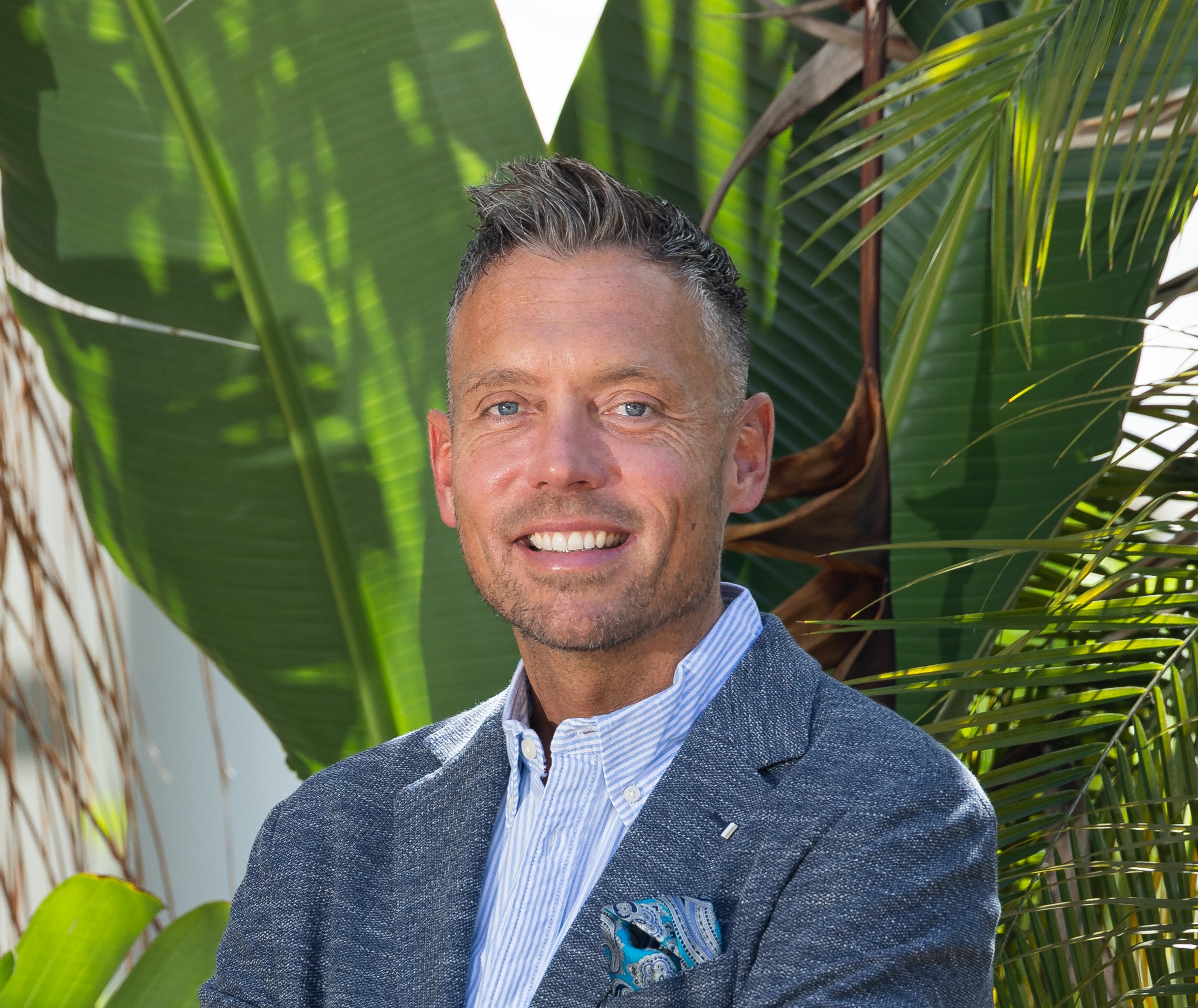
Article by
Scott Ward MBA CCMI
Scott Ward is the founder and CEO of Humanise Solutions, which he established three years ago to help organisations elevate their people, leadership and culture through a human-centric, evidence-based approach. Before moving into business and academia, Scott spent seven years as a professional footballer, playing for Luton Town, Crawley Town and Coventry City FC until injury brought his playing career to a close — a turning point that shaped both his research interests and his approach to leadership.
Scott holds an MBA from Warwick Business School, where his research explored the causal relationship between trauma and decision-making — work that continues to inform how he supports young adults, leaders and teams under pressure. Recognised as a Companion of the Chartered Management Institute (CCMI), its highest grade of membership, he combines academic rigour with the discipline, resilience and team-first mindset of the professional game. At the heart of everything he does is a simple belief: that people perform at their best when they are led, developed and valued as human beings first.
What if the quiet exodus of your middle management isn’t a sign of poor work ethic, but a symptom of a development model that has forgotten the human at its centre? You likely recognise the frustration of watching talented emerging leaders, particularly women and Gen Z talent, struggle to find their footing or lose confidence in their ability to lead effectively. It’s a common challenge in the UK’s shifting professional landscape, and it often leads to the question: what is a leadership development programme actually meant to achieve in a modern workplace?
This guide goes beyond the sterile definitions of corporate training to explore how a leadership development programme can be a nurturing ecosystem rather than a rigid curriculum. We’ll discover how moving beyond simple skill acquisition helps you cultivate genuine wellbeing and sustainable team excellence. By focusing on the transition from current states to future potential, these bespoke initiatives act as a catalyst for human flourishing rather than a mere tick-box exercise.
We’ll break down the essential components of modern programmes, examine the evidence linking these initiatives to improved staff retention, and provide a clear framework for choosing a partner who understands that growth is a journey. You’ll gain the insights needed to transform your organisational culture into one where every leader feels empowered, resilient, and deeply invested in their team’s collective future.
Key Takeaways
- Understand that a leadership development programme is a long-term ecosystem designed to nurture emotional intelligence and sustainable growth, rather than a one-off training course.
- Discover how evidence-based confidence and psychological safety form the essential pillars for cultivating high-performing, resilient teams across your organisation.
- Learn why bespoke, specialised tracks for emerging female leaders and young adults are vital for addressing modern retention challenges and fostering genuine inclusion.
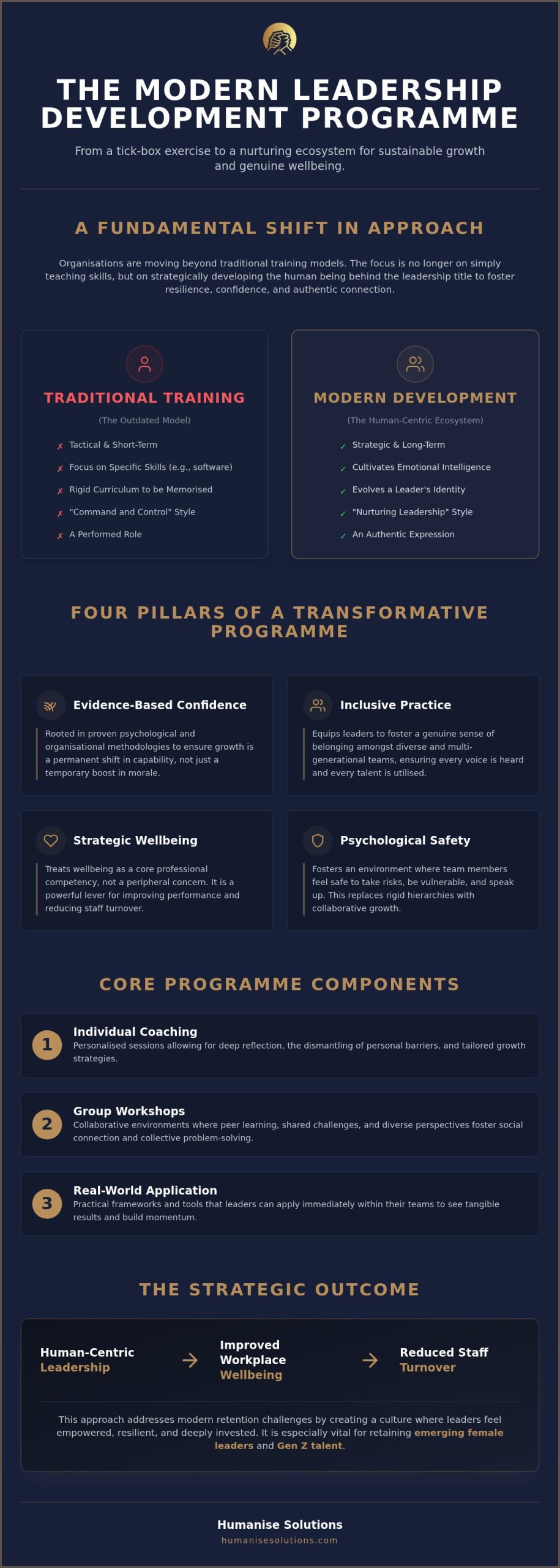
- Explore the direct link between human-centric leadership and improved workplace wellbeing, which serves as a powerful lever for reducing staff turnover amongst middle management.
- Identify the practical steps for implementing a development path that prioritises human values and aligns with the unique cultural needs of your workforce.
Defining the Modern Leadership Development Programme
At its heart, asking what is a leadership development programme invites us to look past the surface of traditional business training. It isn’t a simple curriculum to be memorised or a series of slides to be endured; rather, it’s a structured, long-term ecosystem designed to cultivate the behaviours, emotional intelligence, and strategic mindset required to guide others through complexity. Whilst traditional courses might focus on the mechanics of management, a true development programme focuses on the human being behind the title. It’s about nurturing internal qualities like resilience and confidence so that leadership becomes an authentic expression of character rather than a performed role.
Sustainable growth requires more than a quick fix. These programmes often blend various elements to ensure a lasting impact on the organisational culture:
- Individual Coaching: Personalised sessions that allow for deep reflection and the dismantling of personal barriers.
- Group Workshops: Collaborative environments where peer learning and shared challenges foster social connection.
- Real-World Application: Practical frameworks that leaders can apply immediately within their teams to see tangible results.
Modern initiatives prioritise “nurturing leadership” over traditional “command and control” styles. This shift reflects a deeper understanding of human psychology, recognising that people perform best when they feel supported rather than policed. By internalising these leadership qualities over time, participants don’t just learn about leadership; they evolve into the role.
Training vs. Development: Understanding the Difference
The distinction between training and development is subtle yet profound. Training is often tactical and short-term, focusing on specific skills like learning a new software or understanding a company policy. In contrast, development is strategic and deeply person-centred. A leadership development programme aims to evolve a leader’s identity and their psychological approach to challenges. It focuses on the “how” of human connection and team excellence, moving beyond technical tasks to explore how a leader perceives their influence and handles interpersonal dynamics.
The Shift Towards Human-Centric Leadership
Organisations across the UK are moving away from sterile corporate models towards empathetic guidance. This transition is driven by the need for psychological safety, a concept where team members feel safe to take risks and be vulnerable. Nurturing leadership fosters an environment where every individual feels valued and heard. This human-centric approach is particularly effective when engaging Gen Z talent or building confidence in emerging female leaders, as it replaces rigid hierarchies with collaborative growth. It transforms the workplace from a site of mere production into a space for human flourishing.
Essential Pillars of an Effective Programme
A truly transformative experience moves beyond the superficial to address the psychological foundations of how people lead. When we consider what is a leadership development programme in its most effective form, we find it rests on four foundational pillars. These aren’t just abstract concepts. They are the structural supports that allow a leader to remain steady when the pressure mounts and the path forward is unclear.
Evidence-based confidence is the first of these pillars. Rather than relying on hollow platitudes, a sophisticated programme roots every module in proven psychological and organisational methodologies. This ensures that the growth experienced is not just a temporary boost in morale, but a permanent shift in capability. Alongside this, inclusive practice is vital. Modern leaders must be equipped to foster a genuine sense of belonging amongst diverse and multi-generational teams, ensuring that every voice is heard and every talent is utilised. By focusing on nurturing leadership, organisations can bridge the gap between technical expertise and human connection.
Strategic wellbeing is no longer a peripheral concern. It is a core professional competency. When leaders integrate personal health and resilience into their leadership framework, they create a ripple effect of stability throughout their entire team. This holistic approach ensures that high performance is not achieved at the cost of human flourishing, but as a direct result of it.
Cultivating Emotional Intelligence and Resilience
Emotional intelligence (EQ) is the engine of effective leadership. It begins with self-regulation, which is the ability to manage one’s own emotional state during volatile periods. Leaders who master this can remain calm and objective, providing a grounded presence for their teams. Empathy then acts as a strategic tool. By using social awareness to understand the needs and motivations of others, leaders can drive performance and build deep trust. This resilience is what prevents burnout, allowing leaders to maintain high levels of team excellence even during demanding projects.
Fostering Wellbeing and Psychological Safety
A leader’s behaviour is the single most influential factor in a team’s collective wellbeing. To succeed, what is a leadership development programme must teach the creation of psychological safety. This is an environment where staff feel safe to innovate, fail, and speak up without fear of retribution. When this safety exists, creativity thrives. Practical techniques, such as regular wellbeing check-ins and active listening frameworks, allow leaders to monitor and support team mental health proactively. This approach doesn’t just improve the atmosphere; it builds a culture of sustainable productivity and mutual respect.
Tailoring Growth: Specialised Leadership Tracks
A generic, “one-size-fits-all” approach to professional growth often fails because it ignores the unique pulse of your organisation. When we define what is a leadership development programme for a specific team, we must look at the cultural nuances and specific barriers that participants face every day. A standardised curriculum can feel like an imposition; a bespoke programme feels like an investment. By reflecting your company culture in the learning journey, you ensure that every session resonates with the lived experience of your staff, making the transition from theory to practice much smoother.
Bespoke learning and development programmes allow for a more respectful and relevant engagement. They acknowledge that a senior executive’s needs differ vastly from those of a first-time manager. By tailoring these tracks, you address the specific psychological and social hurdles that might otherwise hinder progress. This level of care demonstrates that the organisation doesn’t just want better managers; it wants to support better humans. It creates a space where growth is not a demand, but a shared aspiration.
- Relevance: Content that mirrors the actual challenges of the workplace.
- Respect: Acknowledging the diverse backgrounds and experiences of every participant.
- Retention: Showing staff that their personal trajectory is a priority for the business.
Women in Leadership: Breaking Internal and External Barriers
Emerging female leaders frequently face a unique set of systemic challenges and internal pressures. Dedicated tracks within a leadership development programme focus on building inner confidence and providing the tools to navigate complex professional landscapes. Female-led cohorts are particularly effective here. They foster a safe space where participants can share experiences and strategies without judgment. This targeted focus doesn’t just empower the individuals; it enriches the entire organisation by diversifying the leadership pipeline and improving collective performance through varied perspectives.
Young Adult and Early Career Development
Supporting Gen Z and young professionals requires a bridge between academic life and the complexities of the modern workplace. Many young adults entering the workforce today possess immense potential but lack “workforce readiness” or the confidence to lead. Social mobility training plays a crucial role here, ensuring that talent from diverse backgrounds isn’t left behind. By nurturing these early-career individuals, you don’t just fill roles; you build a sustainable future. This track focuses on social connection and resilience, helping the next generation find their voice whilst they transition into influential positions within the team.
The Strategic Value of Fostering Wellbeing Through Leadership
When we move beyond the mechanical aspects of management, we begin to see that the true pulse of an organisation is the wellbeing of its people. A leader’s internal state doesn’t just affect their own performance; it creates a ripple effect that touches every member of their team. If a leader is resilient, empathetic, and grounded, those qualities permeate the workspace. Conversely, a leader who is burnt out or disconnected will inevitably foster an environment of anxiety and stagnation. This is why, when asking what is a leadership development programme in a strategic context, we must view it as a primary tool for cultural transformation rather than just a series of lessons.
A sophisticated programme moves the needle from shallow office perks towards a science-driven culture of excellence. Whilst a gym membership or a bowl of fruit might be appreciated, they don’t address the psychological safety or the sense of purpose that employees truly crave. High-quality leadership is directly correlated with team-wide productivity. When people feel supported by a leader who prioritises fostering wellbeing, they are more likely to contribute their best work and stay committed to the organisation’s long-term vision.
Reducing Staff Turnover Through Human Development
It’s a well-documented reality that employees often leave managers rather than organisations. The financial cost of poor leadership is staggering, particularly when you consider the loss of institutional knowledge and the expense of recruitment. By implementing a leadership development programme, you signal a deep investment in the individual leader. This investment increases loyalty and creates a sense of belonging that is hard to replicate. The ROI of human flourishing is found in the stability of your middle management and the confidence of your emerging talent. When leaders feel developed, they are equipped to nurture their own teams, creating a cycle of retention that strengthens the entire business.
Creating a Sustainable Culture of Learning
Meaningful change requires moving away from “compliance training” towards a genuine desire for continuous personal growth. A sustainable culture of learning is one where development is seen as an ongoing journey rather than a tick-box exercise. Senior leaders play a vital role here by modelling the very learning behaviours they wish to see in their teams. When executives show vulnerability and a commitment to their own growth, it gives others permission to do the same. Team excellence workshops help to sustain this momentum, ensuring that the insights gained during the programme don’t fade away but become part of the daily professional vocabulary. This steady progression ensures that growth remains rooted in the company’s DNA long after the initial sessions have concluded.
Designing Your Path: How to Implement a Bespoke Programme
Implementing a journey of growth begins with a clear-eyed look at your current reality. Before selecting a partner, you must identify the specific challenges your organisation faces. Are you struggling with high turnover amongst middle management, or do you need to build confidence in emerging female leaders? By pinpointing these gaps, you ensure that your investment is targeted where it can have the most profound impact. When we discuss what is a leadership development programme in a practical sense, it becomes a bespoke response to these unique pressures rather than a generic solution.
Choosing the right path requires moving away from sterile SaaS platforms or off-the-shelf modules that offer a one-size-fits-all curriculum. Leadership is an interpersonal endeavour; its development should mirror that human connection. Executive involvement is equally vital. When senior leaders actively support the programme and integrate its principles into daily business, they validate the experience for everyone else. Success shouldn’t be measured by attendance numbers alone. Instead, look for long-term behavioural changes and qualitative feedback that proves your team is flourishing and finding a new sense of purpose in their roles.
Selecting the Right Leadership Development Consultant
Finding a partner who aligns with your values is essential. You should look for a consultant who demonstrates empathy, uses an evidence-based methodology, and possesses a track record of bespoke design. Don’t be afraid to ask direct questions during your selection process. Ask them how they handle psychological safety within their sessions and how wellbeing is integrated into their framework. You aren’t just looking for a trainer; you are seeking a mentor and a visionary guide who can walk alongside your team through the complexities of professional and personal growth.
Next Steps for Your Organisation
Your first step should be a thorough audit of your current leadership culture. This helps you find the gaps in both wellbeing and performance that need urgent attention. Once you have identified these, set realistic timeframes for implementation. Meaningful, sustainable change doesn’t happen overnight; it requires steady momentum and care. By choosing a partner that offers nurturing, bespoke support, you ensure that the development process feels personal and respectful to every participant. If you’re ready to move beyond generic training, we invite you to discover how we can help you nurture your teams potential through a journey of authentic transformation.
Cultivating a Future of Human Excellence
We have explored how a modern approach to leadership transcends simple skill acquisition. It’s about building an ecosystem where psychological safety and emotional intelligence allow every individual to thrive. By moving away from rigid, off-the-shelf models, your organisation can address specific needs through specialised tracks for women and young adults. This strategic focus on wellbeing doesn’t just improve the daily culture; it secures the long-term stability and resilience of your teams.
Gaining a clear understanding of what is a leadership development programme is the first step towards transforming your workplace into a centre for human flourishing. Our evidence-based methodology is designed to foster genuine confidence and team excellence through a partnership that prioritises sustainable growth. We invite you to explore our bespoke leadership development programmes and begin the journey of nurturing your team’s true potential. The path to a more connected, high-performing organisation starts with the decision to invest deeply in the human at the heart of every leader.
Frequently Asked Questions
How long does a leadership development programme usually last?
A meaningful leadership development programme usually spans six to twelve months to ensure sustainable behavioural change. Whilst a single workshop might provide a temporary spark, real growth requires a steady rhythm of learning, application, and reflection. This extended timeframe allows participants to internalise new habits and navigate real-world challenges with the support of a guide. It ensures the transition from theory to practice is deeply rooted in daily professional life.
What are the most important leadership skills to develop in 2026?
By 2026, the most vital skills will centre on emotional intelligence, psychological safety, and the ability to nurture diverse talent. As the UK workforce becomes increasingly multi-generational and hybrid, leaders must move beyond technical tasks to focus on human connection. Resilience and empathy are no longer “soft skills” but core competencies. They are essential for maintaining team excellence and navigating the complexities of a rapidly changing professional environment.
Can leadership development really improve employee wellbeing?
Leadership development is a powerful tool for improving wellbeing because the behaviour of a manager directly influences the stress levels of their team. When you ask what is a leadership development programme in a wellbeing context, it’s about teaching leaders to create environments where people feel safe and valued. This reduces the risk of burnout and fosters a culture of care, leading to higher morale and sustained productivity across the organisation.
What is the difference between a leadership coach and a development programme?
A leadership coach provides intensive, one-on-one support tailored to an individual’s specific hurdles, whilst a development programme offers a broader, structured journey. Programmes often include coaching as a component but also incorporate group workshops and peer learning. This combination ensures that individual growth is aligned with the wider organisational culture. It provides a shared language and framework for team excellence that a solo coaching relationship cannot achieve alone.
Is a bespoke programme better than an off-the-shelf leadership course?
Bespoke programmes are almost always more effective than off-the-shelf courses because they are designed to reflect your unique organisational culture and challenges. Generic modules often fail to resonate with the lived experience of your staff. A tailored approach ensures that every session feels relevant and respectful, addressing specific barriers like middle management retention or the confidence of emerging female leaders. It transforms training into a genuine investment in human potential.
How do you measure the success of a leadership development initiative?
Success is best measured through a combination of qualitative feedback, improved retention rates, and observable behavioural changes. Attendance figures tell you very little about actual growth. Instead, look for shifts in psychological safety scores and the quality of social connection within teams. Long-term success is evident when leaders begin to model the behaviours of a nurturing leader without external prompting, creating a sustainable culture of continuous learning.
Do leadership programmes work for small teams or just large corporations?
These programmes are highly effective for small teams, as the impact of leadership behaviour is often more immediate and visible in intimate settings. Whilst large corporations use them to manage scale, small businesses use them to build the strong foundations of trust and resilience needed for growth. The human experience of leading and being led is universal. Every team, regardless of size, deserves a leader who is invested in their flourishing.
How can we support women and young adults through these programmes?
Support is most effective when delivered through specialised tracks that address the unique systemic barriers these groups face. For women, this involves creating safe spaces to build inner confidence and navigate professional hurdles. For young adults, the focus should be on workforce readiness and social mobility. By acknowledging these specific needs, a what is a leadership development programme can foster genuine inclusion and ensure that talent from all backgrounds has the opportunity to lead.
