
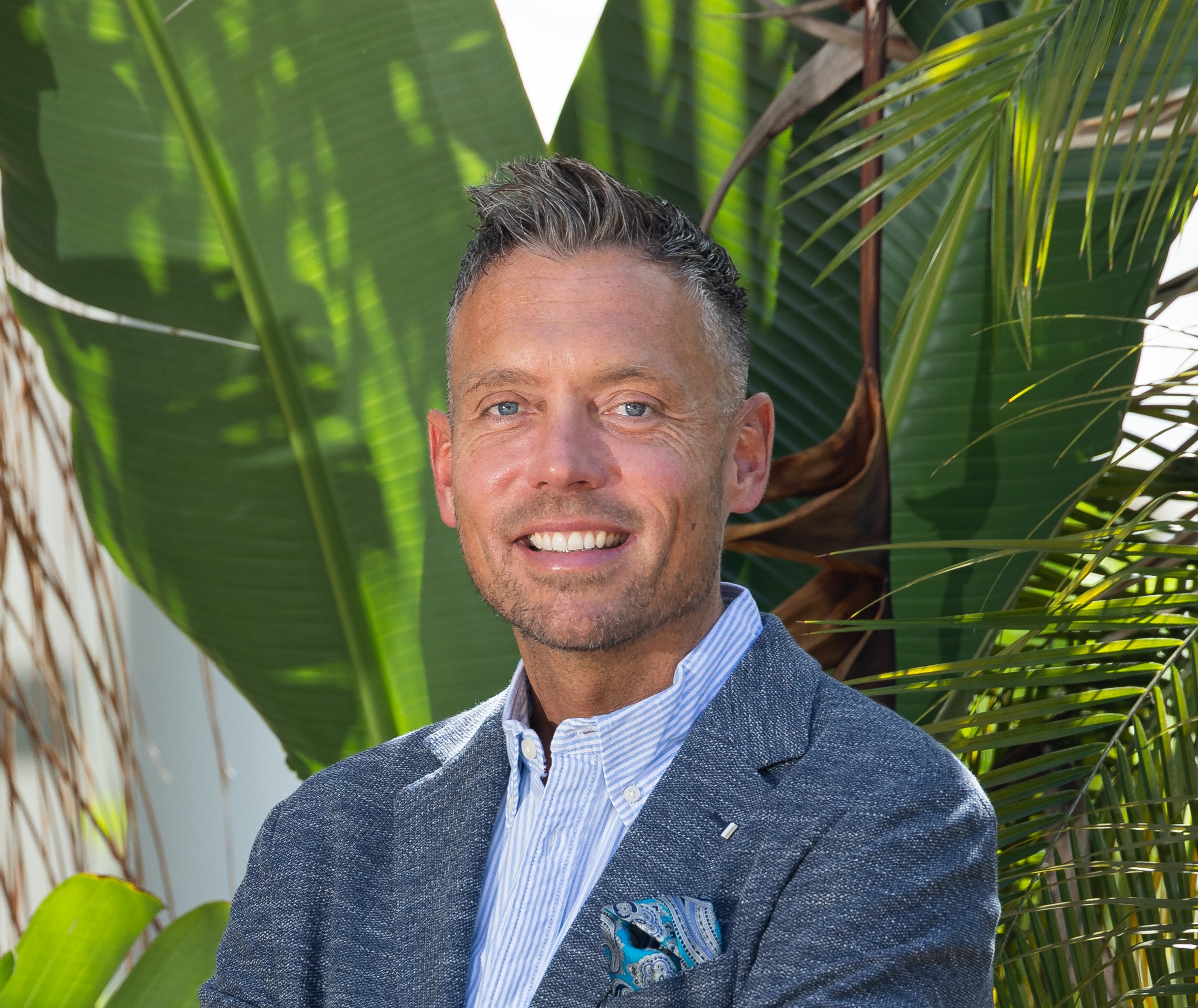
Article by
Scott Ward MBA CCMI
Scott Ward is the founder and CEO of Humanise Solutions, which he established three years ago to help organisations elevate their people, leadership and culture through a human-centric, evidence-based approach. Before moving into business and academia, Scott spent seven years as a professional footballer, playing for Luton Town, Crawley Town and Coventry City FC until injury brought his playing career to a close — a turning point that shaped both his research interests and his approach to leadership.
Scott holds an MBA from Warwick Business School, where his research explored the causal relationship between trauma and decision-making — work that continues to inform how he supports young adults, leaders and teams under pressure. Recognised as a Companion of the Chartered Management Institute (CCMI), its highest grade of membership, he combines academic rigour with the discipline, resilience and team-first mindset of the professional game. At the heart of everything he does is a simple belief: that people perform at their best when they are led, developed and valued as human beings first.
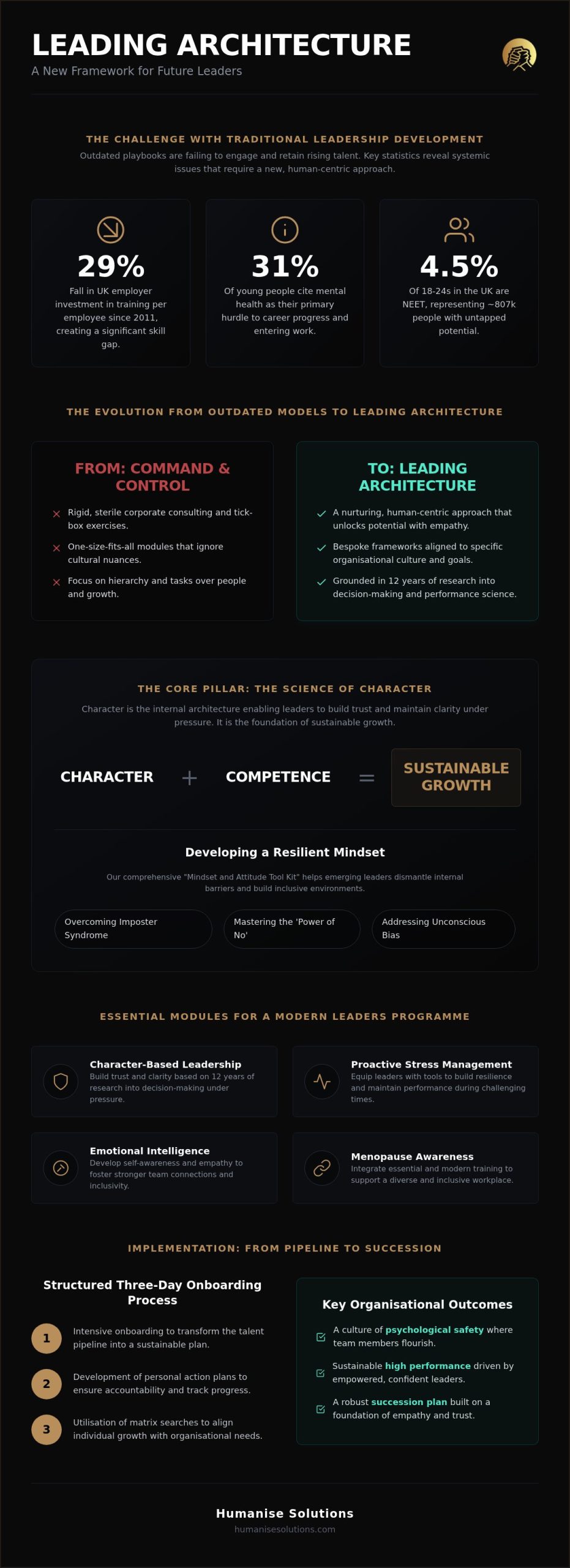
What if the reason your rising stars are leaving isn’t a lack of ambition, but a lack of architecture? With UK employer investment in training falling by 29% per employee since 2011, many organisations are searching for a future leaders programme framework that actually works in a world of remote teams and “job hugging.” You likely feel the friction as Gen Z talent seeks deeper purpose or as managers struggle to maintain genuine connection. It’s clear that the traditional, sterile corporate playbook is no longer enough to sustain a flourishing workplace.
We’re here to help you bridge that gap. This guide unveils a scientifically-backed approach to leadership architecture designed for the complexities of 2026, moving beyond tick-box exercises to build a human-centric foundation for growth. You’ll discover how to cultivate emotional intelligence and resilience whilst addressing real barriers, such as the fact that 31% of young people currently cite mental health as a hurdle to their progress. We’ll preview a structured path to psychological safety and high performance, ensuring your leadership pipeline isn’t just full, but truly empowered to lead with empathy and confidence.
Key Takeaways
- Transition from outdated “command and control” models to a nurturing leadership architecture that prioritises the human experience in every professional interaction.
- Discover how character-based leadership, rooted in 12 years of research, empowers your team to maintain clarity and build trust even under significant pressure.
- Integrate essential modules into your future leaders programme framework that address modern workplace needs, including menopause awareness and proactive stress management.
- Implement a structured, three-day onboarding process that transforms the talent pipeline into a sustainable succession plan through personal action plans and matrix searches.
- Leverage evidence-based insights from experts like Serena Kersten MBE to cultivate a culture of psychological safety and high performance within your organisation.
The Evolution of the Future Leaders Programme Framework
Leadership has moved away from the rigid “command and control” styles of the past. As we look toward 2026, a modern future leaders programme framework must prioritise the “human experience” in every interaction. It isn’t just about managing tasks; it’s about nurturing the people behind them. The field of Leadership development is shifting toward models that value emotional intelligence and psychological safety over mere hierarchy. This evolution reflects a deeper understanding that high performance is a byproduct of human flourishing.
The urgency for this shift is highlighted by a growing social challenge within the UK talent pool. Currently, 4.5% of 18-24s are NEET (~807k people). This represents a vast reservoir of untapped potential that many organisations struggle to access. Traditional training often misses the mark because it ignores the underlying obstacles facing this generation. Crucially, 31% of NEETs cite mental-health barriers as their primary reason for not working. A framework that doesn’t account for these human realities will inevitably fail to build a resilient, long-term talent pipeline.
The Problem with Sterile Corporate Consulting
Detached, jargon-heavy programmes often fail to resonate with Gen Z and young adults. They don’t want empty buzzwords; they want authenticity and a sense of belonging. We believe in replacing sterile corporate consulting with a blend of empathetic warmth and evidence-based confidence. To keep talent engaged, organisations must move beyond superficial perks and embrace science-driven wellbeing. This ensures that growth is sustainable and deeply rooted in the individual’s flourishing, rather than just another tick-box exercise on a spreadsheet.
Defining Leading Architecture
We define this transformative approach as “Leading Architecture.” Instead of using off-the-shelf modules that offer a one-size-fits-all solution, Leading Architecture creates a bespoke structure aligned with your specific organisational culture and performance goals. It focuses on achieving client-driven outcomes by unlocking potential with empathy. Our young adult programmes are built on this philosophy, ensuring every developmental step is grounded in 12 years of research into decision-making and trauma prevention. By involving experts like Serena Kersten MBE and Scott Ward, we ensure the architecture is both visionary and pragmatically grounded in excellence. This structured, repeatable framework turns current skill gaps into future competitive advantages.
The Science of Character: Building the Core Pillar
Character is far more than a collection of soft skills; it’s the core pillar of a robust future leaders programme framework. It represents the internal architecture that enables a leader to build genuine trust and think with absolute clarity whilst under immense pressure. This isn’t about following a corporate script; it’s about developing the internal qualities that allow for consistent, ethical decision-making in a world that is often chaotic and unpredictable. When a leader’s character is well-defined, their ability to influence and inspire becomes a natural extension of who they are.
We’ve incorporated over 12 years of intensive research into decision-making processes to ensure this framework is grounded in logic rather than just theory. This evidence-based approach shows that character and competence are two sides of the same coin. Without character, competence is fragile; without competence, character lacks impact. Together, they drive sustainable organisational growth by creating a culture where people feel seen, supported, and valued. This methodology mirrors global Leadership and Executive Development Guidance which highlights that internal stability is born from consistent, principled leadership.
Emotional Intelligence and Mindset
Emerging leaders frequently encounter internal barriers that can stifle their potential. We deploy a comprehensive “Mindset and Attitude Tool Kit” to help them dismantle these obstacles. This includes addressing the common struggle with Imposter Syndrome and teaching the “Power of No” as a tool for strategic prioritisation. By fostering a deep awareness of unconscious bias, we help leaders build inclusive environments where psychological safety is the norm. These skills ensure they manage complex social dynamics with empathy and confidence.
Resilience and Trauma Prevention
Most corporate training ignores the reality of trauma and its impact on professional performance. We believe trauma prevention is a fundamental part of any modern leadership framework. High-potential employees are often at the highest risk of burnout because they carry the heaviest loads. By building personal resilience, we empower them to maintain their belief and dignity during challenging life transitions or organisational setbacks. This scientific approach ensures your talent pipeline remains vibrant and capable of navigating change. If you’re ready to integrate these psychological pillars into your business, connect with our specialists to explore a tailored design.
Essential Modules for a Comprehensive Framework
A robust future leaders programme framework must look beyond technical skills to encompass the holistic human experience. It’s about building a toolkit that addresses the workplace’s evolving social and psychological needs. This architecture ensures that rising stars don’t just survive their roles but thrive within them, contributing to a sustainable and high-performing culture. When development is human-centric, the transition from current states to future potential feels like a natural progression rather than a forced mandate.
People and workplace development modules form the bedrock of this growth. We focus on teaching facilitation skills that allow leaders to guide discussions effectively, whilst training them to identify critical skill gaps within their teams. This proactive approach prevents stagnation and ensures the organisation remains agile. Alongside professional skills, we integrate comprehensive wellbeing modules. These cover stress awareness and healthy living, but also address often-overlooked topics like menopause in the workplace. By acknowledging these human realities, we create a culture where every employee feels supported through all stages of their life.
Career and self-development modules empower individuals to take ownership of their professional journey. This includes practical guidance on navigating the job market and creating winning applications, which is vital for engaging the 18-24 demographic and addressing the NEET crisis mentioned earlier. Entrepreneurial skills are equally crucial; we teach leaders how to build a personal brand and utilise the Business Model Canvas to understand value creation. Networking isn’t just about collecting contacts; it’s about building meaningful social connections that foster long-term collaboration and shared success.
Nurturing Inclusive Leadership
Building an inclusive team culture requires more than just a policy; it demands active commitment to equality, diversity, and inclusion (ED&I). Our modules focus on managing others effectively, with a specific emphasis on leading remote teams in a hybrid world. We believe in the power of mentoring and “paying it forward.” This ensures that current leaders are actively involved in succession planning, passing on their wisdom to the next generation and creating a continuous cycle of growth and empowerment.
High-Performance Behaviours
Optimising team performance is a deliberate act of communication and conflict resolution. In complex or uncertain environments, teamwork becomes the primary driver of success. We teach leaders how to navigate friction and turn it into a catalyst for innovation. When teams understand how to collaborate under pressure, they achieve results that individuals cannot reach alone. Explore our Team Excellence services to see how we help organisations build these high-performing, resilient cultures that are rooted in psychological safety.
Implementation: From Talent Pipeline to Succession
The success of any future leaders programme framework lies in its practical application. Moving from theory to tangible results requires a methodical approach that prioritises the individual’s journey. We utilise a structured three-day onboarding process designed to ground emerging leaders in their new roles immediately. This isn’t a passive orientation; it’s an active architectural build. Day 1 focuses on creating personal action plans that align individual aspirations with organisational goals. Day 2 involves job network set-up, ensuring participants have the social connections needed to thrive. By Day 3, the matrix search begins, allowing leaders to identify opportunities for collaboration across the entire business structure.
This implementation strategy extends beyond internal training. We integrate participants into a wider UK talent pool, ensuring that their career transition isn’t just a temporary placement but a long-term strategic move. Our commitment to excellence is reflected in our metrics. We don’t just aim for satisfaction; we strive for a 9.98/10 feedback rating through constant evaluation and refinement. This rigorous focus on quality ensures that the talent pipeline remains robust and that every leader feels equipped to handle the complexities of a modern workplace whilst maintaining their psychological well-being.
Succession Planning and Talent Management
Identifying future leaders early in their careers is essential for long-term sustainability. Our framework uses 1-1 coaching and certified workshops to nurture these individuals, providing a safe space to explore their potential. By focusing on character and competence, we help organisations build a succession plan that is both resilient and inclusive. Discover our Young Adult Programmes to see how we cultivate this next generation of talent with empathy and scientific precision.
Post-Merger and Change Transformation
Organisations undergoing significant change, such as mergers or rapid scaling, require a framework that is adaptable. Leading through transition demands a high level of relational intelligence and the ability to manage shifting expectations. We enhance our high-performance strategy by introducing guest speakers and special advisors, such as Serena Kersten MBE and Scott Ward. Their involvement provides unique insights into resilience and performance under pressure, helping teams navigate change with confidence and clarity. If you’re ready to transform your leadership pipeline, contact our team today to begin designing your bespoke architecture.
The Humanise Solutions Approach: Bespoke Leadership Design
Humanise Solutions operates with the belief that leadership is a craft, not a commodity. As the 5th largest digital recruiter in EMEA, we possess a unique perspective on the global talent market that traditional consultancies often lack. Every future leaders programme framework we design is an exercise in Leading Architecture, bridging the gap between current organisational needs and future potential. We don’t rely on generic, off-the-shelf modules; instead, we utilise a scientific, human-centric approach led by world-class experts like Serena Kersten MBE. This ensures that every developmental journey is rooted in evidence, empathy, and 12 years of research into decision-making and trauma prevention.
The results of this dedicated support speak for themselves. We maintain a 100% completion rate for our programmes, whilst achieving 50-80% job outcomes for our participants. These aren’t just statistics; they represent lives transformed and businesses strengthened by resilient, high-performing talent. By tailoring every framework to the unique abilities and aspirations of your team, we ensure that growth is sustainable and the impact is felt across every level of the organisation. This bespoke learning design allows us to unlock potential with a level of precision that drives genuine, long-term success.
Women in Leadership tracks
Empowering women to reach their full potential requires a nuanced understanding of the professional landscape. Our specialised ILM programmes are designed to build inner confidence and provide the tools necessary to navigate the unique challenges of female leadership. We focus on fostering a sense of agency and resilience, ensuring that women don’t just occupy leadership roles but thrive within them. By cultivating these internal qualities, we help organisations move toward a state of genuine inclusive excellence. For a deeper look at this transformative journey, read our guide on Empowering Women in the Workplace.
Young Adult Development and Social Mobility
Social mobility is a core pillar of our mission. With 4.5% of 18-24s currently classified as NEET (~807k people), the responsibility to bridge this gap is significant. We use our future leaders programme framework to nurture this untapped potential, creating a sustainable talent pipeline that values diverse perspectives and lived experiences. By celebrating unique skills for success, we help young adults overcome barriers and transition into meaningful careers. This dedicated support ensures that the next generation of leaders is as diverse as the world they serve. Explore how we are Nurturing Potential through Young Adult Professional Development.
Architecting a Future of Human Flourishing
Building a resilient organisation starts with a fundamental shift in perspective. You’ve discovered how integrating character, wellbeing, and evidence-based decision-making creates a culture where talent doesn’t just stay, but flourishes. A modern future leaders programme framework is no longer a luxury; it’s the essential architecture required to navigate the complexities of 2026 and beyond. By prioritising the human experience, you transform your leadership pipeline into a sustainable engine for growth and innovation.
We’re ready to partner with you on this journey of development. As the 5th largest digital recruiter in EMEA, we bring a unique blend of global market insight and deep psychological expertise to every project. Our commitment to your success is evidenced by our 100% completion rates and an exceptional 9.98/10 average programme feedback rating. We believe in unlocking potential with empathy to ensure your organisational goals are met with clarity and confidence.
Elevate your people and culture with our bespoke leadership programmes. Together, we can build a future where every leader is empowered to lead with compassion, resilience, and purpose. We look forward to supporting your transition toward a more human-centric workplace.
Frequently Asked Questions
What are the core components of a future leaders programme framework?
The core components of a successful future leaders programme framework include holistic modules spanning People and Workplace Development, Wellbeing, and Career and Self-Development. These pillars ensure that emerging leaders master practical skills like facilitation and conflict resolution whilst prioritising internal resilience. By integrating entrepreneurial thinking and emotional intelligence, the framework builds a well-rounded architecture that prepares individuals for the complex social and professional dynamics of the modern workplace.
How do you measure the ROI of a leadership development programme?
We measure the return on investment through tangible outcomes and participant feedback. Our programmes consistently achieve a 100% completion rate and deliver between 50% and 80% job outcomes for participants. Additionally, our 9.98/10 average feedback rating reflects the high level of engagement and perceived value. By tracking these metrics alongside internal improvements in team excellence and employee retention, organisations can clearly see the impact of structured leadership architecture on their bottom line.
What is the difference between functional skills and character-based leadership?
Functional skills focus on technical competencies such as project management or data governance. In contrast, character-based leadership addresses the internal architecture of the individual. It’s rooted in over 12 years of research into decision-making and trauma prevention. Whilst functional skills allow a leader to perform tasks, character enables them to build trust, maintain clarity under pressure, and lead with empathy. Both are essential, but character provides the foundation for long-term sustainability.
How can a leadership framework support young adults who are NEET?
A leadership framework supports the 807,000 young people currently classified as NEET by providing a structured path to employment. We recognise that 31% of these individuals cite mental-health barriers as their primary reason for not working. Our programmes address this through nurturing leadership and dedicated matrix partners who support each participant’s transition. By focusing on personal resilience and winning job applications, we help bridge the gap between untapped potential and professional opportunity.
Why is trauma prevention included in a professional leadership framework?
Trauma prevention is included because psychological wellbeing is a prerequisite for high performance. Backed by 12 years of scientific research, this focus helps leaders identify and mitigate stressors before they lead to burnout or disengagement. By understanding how past experiences influence current behaviours, leaders can create environments that prioritise dignity at work and emotional safety. This proactive approach ensures that high-potential employees remain resilient and capable of navigating significant organisational change or life transitions.
How does a bespoke leadership programme differ from off-the-shelf training?
A bespoke leadership programme is designed around the unique abilities of your team and specific organisational goals. Unlike off-the-shelf training, which often relies on generic, one-size-fits-all modules, bespoke architecture aligns every developmental step with your culture. This ensures that the training is relevant, engaging, and directly addresses identified skill gaps. By involving experts like Serena Kersten MBE, we provide a level of specialist insight that sterile, mass-produced programmes simply cannot match.
Can a leadership framework help with employee retention amongst Gen Z?
Yes, a human-centric future leaders programme framework significantly improves retention amongst Gen Z talent. This generation values authenticity, purpose, and psychological safety. By providing a clear career transition path and focusing on self-care and personal development, organisations show a genuine investment in their people. When employees feel that their unique skills are celebrated and their wellbeing is prioritised, they are far more likely to remain committed to the organisation for the long term.
What role does psychological safety play in a future leaders programme?
Psychological safety is the bedrock of inclusive leadership and team excellence. It allows team members to speak up, take risks, and share ideas without fear of negative consequences. Within our framework, we foster this safety through modules on unconscious bias, conflict resolution, and effective mentoring. When leaders prioritise emotional intelligence and empathy, they create a culture where innovation flourishes and every individual feels empowered to contribute their best work to the collective success.
