

Article by
Scott Ward MBA CCMI
Scott Ward is the founder and CEO of Humanise Solutions, which he established three years ago to help organisations elevate their people, leadership and culture through a human-centric, evidence-based approach. Before moving into business and academia, Scott spent seven years as a professional footballer, playing for Luton Town, Crawley Town and Coventry City FC until injury brought his playing career to a close — a turning point that shaped both his research interests and his approach to leadership.
Scott holds an MBA from Warwick Business School, where his research explored the causal relationship between trauma and decision-making — work that continues to inform how he supports young adults, leaders and teams under pressure. Recognised as a Companion of the Chartered Management Institute (CCMI), its highest grade of membership, he combines academic rigour with the discipline, resilience and team-first mindset of the professional game. At the heart of everything he does is a simple belief: that people perform at their best when they are led, developed and valued as human beings first.
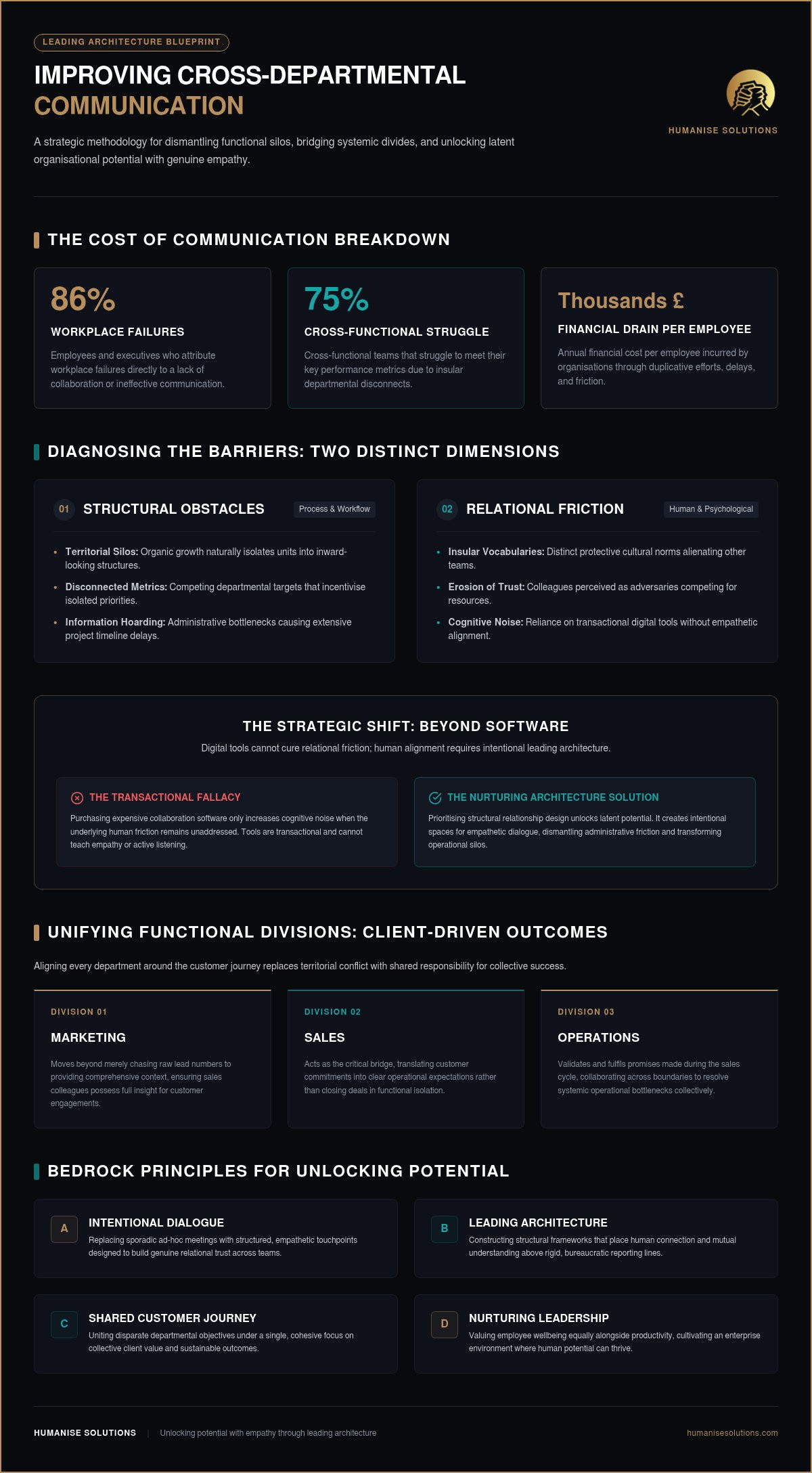
Research reveals that 86% of employees and executives attribute workplace failures to a lack of collaboration or ineffective communication. This isn’t just a minor operational hiccup; it’s a systemic drain on potential that can cost an organisation thousands of pounds per employee every year. When you’re focused on improving cross-departmental communication, you’re not just looking for a new tool or a quicker reporting line. You’re trying to heal the human friction that stalls progress and dampens collective morale.
It’s frustrating to watch talented teams retreat into defensive silos, especially when you’ve already invested in collaboration software that failed to bridge the gap. You know the real issue isn’t a lack of data, but a lack of connection. We understand the exhaustion that comes from navigating conflicting priorities and cultural territorialism. It’s time to shift the focus from sterile processes to a nurturing leadership architecture that values wellbeing as much as productivity.
This guide provides a logical methodology for dismantling organisational barriers and cultivating genuine empathy across functional divisions. You’ll discover how to establish transparent, friction-free workflows and foster mutual understanding amongst team leaders. By aligning your leadership architecture with collective outcomes, you can transform your current challenges into a foundation for sustainable growth and enterprise-wide excellence.
Key Takeaways
- Recognise how organic growth creates territorial silos and learn to replace functional isolation with intentional, empathetic dialogue.
- Discover the role of leading architecture in designing a structural bridge that unites disparate departmental goals through human-centred relationship frameworks.
- Master a strategic five-step framework for improving cross-departmental communication, moving from initial diagnostic audits to sustained cultural synergy.
- Identify the difference between structural workflow obstacles and deep-seated relational friction to address the psychological roots of team conflict.
- Understand how nurturing leadership acts as the essential bedrock for unlocking latent potential and maintaining long-term organisational alignment.
Understanding Cross-Departmental Communication: Moving Beyond Functional Silos
Cross-departmental communication is the lifeblood of a healthy, thriving organisation. We define it as intentional, empathetic dialogue that bridges the gaps between separate business units to achieve shared success. As businesses scale, they often lose their early-stage agility. Organic growth, whilst exciting, unintentionally breeds territorial silos. Teams become islands, each with their own competing priorities and distinct sub-cultures. When you focus on improving cross-departmental communication, you aren’t just adjusting a workflow; you’re rebuilding the structural bridge that allows human potential to flourish. Without this alignment, organisations face a heavy toll: missed deadlines, duplicative effort, and a sense of operational gridlock that stifles innovation.
The Hidden Toll of Functional Isolation
When business units become isolated, they develop insular vocabularies and protective cultural norms. These invisible barriers distance them from the “outsiders” in the next office or digital workspace. This erosion of trust is devastating for morale. Colleagues begin to view other departments as adversaries or obstacles rather than partners in a common mission. Information hoarding often becomes a defensive tactic, yet it causes massive delays in delivery timelines. Research from the Harvard Business Review indicates that 75% of cross-functional teams struggle to meet their key performance metrics because of these disconnects. The cultural cost is equally high; staff wellbeing suffers when every interaction feels like a negotiation or a battle for resources.
Why Digital Tools Cannot Cure Relational Friction
Many leaders hope that a new software suite will solve their alignment issues. They invest in expensive collaboration platforms, only to find that cognitive noise increases whilst clarity remains elusive. Digital tools are naturally transactional. They don’t foster the genuine, human-centred dialogue or active listening needed for deep, sustainable alignment. We’ve seen businesses waste significant investment because they ignored the underlying human friction. Software cannot teach empathy or resolve a lack of trust. Before you adopt a new tool, you must address the foundational behavioural change. Real progress in improving cross-departmental communication starts with nurturing leadership that prioritises leading architecture over administrative quick fixes. By focusing on the human experience within the professional context, you unlock the latent potential that silos have kept hidden for too long.
Leading Architecture: Designing an Infrastructure for Collaboration
Leading architecture is far more than a simple organisational chart. It’s the intentional design of inter-team relationship structures that prioritise human connection over administrative convenience. Whilst traditional consulting focuses on reporting lines, we believe that structural frameworks must be built to unlock human potential through genuine empathy. When you focus on improving cross-departmental communication, you’re essentially building a bridge that allows different experts to work in harmony. This architecture dismantles the administrative friction that often slows down progress, replacing it with a fluid system where information flows naturally between functional boundaries.
Shifting from Functional Silos to Client-Driven Outcomes
The most effective way to unify divergent agendas is to focus relentlessly on the end client. When Marketing, Sales, and Operations all align around the customer journey, the invisible walls between them begin to crumble. Marketing isn’t just chasing leads; they’re ensuring the Sales team has the context needed to provide a seamless experience. Operations isn’t just fulfilling orders; they’re validating the promises made during the sales cycle. This shared responsibility for collective success ensures that systemic operational hurdles are solved together, rather than being passed from one department to another as a problem. It moves the focus from internal competition to external value, which is the cornerstone of sustainable business performance.
Establishing Cohesive Inter-Team Governance
To sustain this alignment, businesses need collaborative governance forums that replace isolated departmental reporting routines. These aren’t just more meetings; they’re cross-functional project squads designed around specific operational transformation goals. By bringing diverse perspectives together, you create a culture of mutual support and shared accountability. This approach is central to improving cross-departmental communication because it moves the conversation from my team to our objective. Integrating these structures requires a shift in mindset, which is where our professional development services can provide the necessary foundation. If you’re ready to explore how these frameworks can transform your organisation, you might want to speak with our specialists about your specific goals.
Diagnosing the Barriers: Structural vs Relational Friction
To effectively address the bottlenecks in your organisation, you must first distinguish between structural workflow obstacles and deep-seated relational behaviours. We’ve found that most breakdowns aren’t accidental; they’re systemic. Our approach is grounded in over 12 years of research into decision-making processes and human behaviour, which reveals that “poor communication” is often a symptom of deeper misalignments. Whilst software might track a task, it cannot mend the friction caused by contradictory incentives or psychological defensiveness. Improving cross-departmental communication requires a dual focus on the architecture of your processes and the psychological health of your professional relationships.
Structural Hurdles: Conflicting Priorities and Opaque Processes
Structural friction often stems from contradictory key performance indicators (KPIs) that inadvertently pit colleagues against each other. If the marketing team is incentivised for lead volume whilst operations is measured on meticulous quality control, conflict is built into the calendar. These competing targets create opaque processes where teams don’t understand the “why” behind their colleagues’ actions. This lack of transparency breeds misunderstanding and, eventually, resentment. By using clear process mapping, you can eliminate this ambiguity. Mapping the journey allows dependent working groups to see the entire landscape, transforming functional isolation into a shared understanding of collective operational requirements.
Relational Hurdles: Empathy Deficits and Protective Mindsets
Even with perfect processes, relational hurdles can stall progress. When inter-departmental feedback is perceived as criticism, it often triggers a psychological threat response. This biological reaction leads to a defensive posture where teams prioritise protection over performance, fostering a damaging blame culture. A fear of failure encourages staff to hoard information as a form of security. Cultivating active empathy is the only sustainable antidote. It allows leaders to dismantle the “us-versus-them” mentality by prioritising psychological safety above all else. When people feel safe to speak honestly across functional boundaries, they unlock their true potential and move from defensive silos to collaborative synergy. We explore this transformation further in our guide to building team excellence, which highlights how human-centred leadership architecture transforms workplace dynamics from the inside out.
A Strategic Five-Step Framework for Improving Cross-Departmental Communication
Transformation isn’t a single event; it’s a deliberate sequence of actions that respect the human element whilst providing operational clarity. To move beyond the silos we’ve diagnosed, leadership teams must adopt a methodology that balances structural design with psychological safety. This framework offers a logical path to improving cross-departmental communication by focusing on the transitions between current challenges and future potential. By following these steps, you can dismantle administrative friction and replace it with a culture of collective enterprise outcomes.
Step 1 & 2: Diagnostic Mapping and Unifying Shared Objectives
The journey begins with empathetic cross-departmental listening tours. Leaders must step away from their dashboards and engage in genuine dialogue with staff at every level to identify the true points of friction. These sessions often reveal that what looks like incompetence is actually a response to conflicting priorities. Once these barriers are identified, the next step is to harmonise conflicting departmental key performance indicators into unified, client-centred goals. By mapping critical interdependencies, you can pinpoint exactly where handovers encounter operational or communicative delay, ensuring that every team is measured by their contribution to the collective customer journey rather than isolated functional targets.
Step 3 & 4: Designing Joint Rituals and Collaborative Channels
Establishing leading architecture requires the implementation of intentional cross-functional check-ins. These rituals are designed to replace low-value transactional email chains with high-value, human-centred dialogue. A key part of improving cross-departmental communication is establishing structured protocols for giving, receiving, and integrating constructive lateral feedback. When teams have a safe forum to tackle friction points collaboratively, they move from a defensive posture to a shared problem-solving mindset. This transition reduces cognitive noise and ensures that information flows where it is needed most, rather than being trapped within departmental boundaries.
Step 5: Cultivating Cross-Boundary Empathy and Leadership Mentorship
The final stage involves embedding long-term sustainability through team shadowing and mentorship. Encouraging staff to spend time in peer departments builds a deep appreciation for the unique pressures their colleagues face. This active empathy dissolves the “us-versus-them” mentality and fosters a sense of shared identity. To maintain this momentum, leadership must adopt coaching practices that nurture interpersonal vulnerability and accountability. Developing these nurturing leadership skills ensures that the new collaborative culture is not just a temporary initiative but a foundational shift in organisational behaviour. If you are ready to begin this transition, you can book a diagnostic consultation with our specialists to map your path forward.
Embedding Lasting Synergy: The Power of Nurturing Leadership
Nurturing leadership acts as the vital bedrock of sustained inter-departmental collaboration. Empathetic leaders do more than manage; they unlock latent human potential by dismantling the administrative silos that often constrain creativity. By shifting focus from control to cultivation, these leaders create a safe environment where cross-boundary dialogue becomes the norm. This approach is essential for improving cross-departmental communication because it addresses the human experience within the professional context. It’s about moving from a state of functional isolation to one of collective flourishing.
The Role of Empathetic Leadership in Cultural Transformation
Leadership behaviours set the tone for openness, curiosity, and collaboration throughout the entire organisation. When a leader models vulnerability by actively seeking input from peer divisions, they signal that collective wisdom is valued over territorialism. This behaviour encourages staff to reach across functional boundaries without fear of overstepping or judgment. The strategic value of bespoke training in this phase cannot be overstated; it helps reshape entrenched managerial behaviours that might otherwise stall progress. By showing a keen awareness of social dynamics, nurturing leaders act as visionary guides who remain deeply rooted in human values.
Fostering Organisational Excellence Through Bespoke Learning
Generic workshops often fail to bridge internal operational divides because they ignore the unique friction points of a specific business. Targeted development programmes, however, align divergent teams around shared capabilities and collective outcomes. This is particularly effective in bridging multi-generational divides, ensuring that the wealth of experience amongst senior staff harmonises with the innovative energy of younger team members. Humanise Solutions applies over 12 years of research into decision-making and human behaviour to ensure these bespoke learning and development programmes deliver measurable excellence. This methodical approach ensures that improving cross-departmental communication becomes a permanent part of your leading architecture.
We believe that meaningful change takes time and care. It is not a high-pressure shift, but a deliberate transition towards a more resilient future. If you are an executive seeking to build a cohesive leadership architecture focused on collective enterprise outcomes, we invite you to partner with specialists in human flourishing. Together, we can design a human-centred organisational culture that achieves sustainable business performance whilst nurturing the psychological wellbeing of every team member.
Cultivating a Future of Unified Potential
Transitioning from functional isolation to a cohesive leadership architecture requires more than just new processes. It demands a commitment to unlocking human potential with empathy. By aligning your teams around shared, client-driven outcomes and establishing collaborative governance, you move beyond the defensive silos that hinder growth. Improving cross-departmental communication is a journey of cultural transformation, where structural clarity meets psychological safety.
Our methodology is built on over 12 years of research into decision-making and human behaviour, ensuring that every step is grounded in logic. With a 9.98% feedback rating for transformative programme delivery and a 100% completion rate, we focus on driving measurable enterprise outcomes that last. It’s time to replace operational gridlock with sustainable synergy. Discover how Humanise Solutions nurtures collaborative leadership across your teams and helps you build a resilient, human-centred organisation. You have the power to foster a workplace where every voice contributes to a collective vision of excellence.
Frequently Asked Questions
Why do cross-departmental communication barriers develop in growing organisations?
Barriers develop because organic growth unintentionally creates territorial silos with competing priorities. As teams scale, they often lose their early agility and retreat into isolated units with protective cultural norms. This functional isolation erodes trust amongst colleagues, making them view other departments as adversaries or obstacles. Overcoming this requires intentional dialogue to bridge the gaps that growth has created, ensuring every team remains connected to the organisation’s core mission and human-centric values.
How does poor cross-departmental communication affect workplace wellbeing and staff retention?
Poor communication significantly damages wellbeing by fostering a culture of blame and defensive positioning. When staff encounter constant operational gridlock or information hoarding, their stress levels rise and job satisfaction plummets. This environment triggers psychological threat responses, making employees feel undervalued and unsafe. Over time, this lack of connection leads to higher turnover rates as talented individuals seek workplaces that prioritise empathy, social connection, and genuine human flourishing.
Can collaboration software solve communication challenges between different teams?
Software cannot cure relational friction because it focuses on transactional exchanges rather than human connection. Whilst digital tools might manage tasks, they often increase cognitive noise without providing clarity or resolving deep-seated mistrust. Effective collaboration requires a shift in mindset and behavioural change before technology is introduced. Sustainable alignment comes from nurturing leadership and a well-designed architecture that values active listening and mutual understanding over mere administrative efficiency.
What is the role of leadership architecture in improving cross-functional alignment?
Leadership architecture provides the structural bridge needed for improving cross-departmental communication by designing relationship frameworks that support collective outcomes. It moves beyond traditional reporting lines to create collaborative governance forums and cross-functional squads. This approach ensures that information flows naturally across boundaries, dismantling administrative friction. By prioritising leading architecture, organisations can unlock latent potential and ensure that every team is structurally aligned to deliver client-driven results.
How can managers align conflicting departmental goals around client-driven outcomes?
Managers can achieve alignment by harmonising conflicting key performance indicators into unified goals that follow the customer journey. When every department is measured by its contribution to the client’s experience, territorial agendas naturally dissolve. Clear process mapping helps teams see their interdependencies, transforming isolated targets into a shared responsibility for success. This shift ensures that operational hurdles are tackled collaboratively, as everyone is focused on the same high-reaching enterprise outcomes.
What are the first steps to addressing defensiveness between operational departments?
The first steps involve conducting empathetic listening tours to identify the true psychological roots of inter-team friction. Leaders must model vulnerability by actively seeking input from peer divisions and establishing a foundation of psychological safety. By prioritising open dialogue and curiosity over criticism, you can begin to dissolve the “us-versus-them” mentality. This transition requires a steady, methodical pace to ensure that staff feel supported and heard rather than overwhelmed by sudden demands.
How do bespoke leadership programmes foster long-term inter-team excellence?
Bespoke programmes foster excellence by using over 12 years of research into decision-making to align teams around shared capabilities. Unlike generic workshops, these initiatives address specific organisational behaviours and nurture internal qualities like resilience and confidence. By improving cross-departmental communication through targeted learning, organisations achieve measurable outcomes and higher cultural retention. These programmes act as a catalyst for systemic growth, ensuring that inter-team synergy becomes a permanent part of the organisational infrastructure.
