Article by
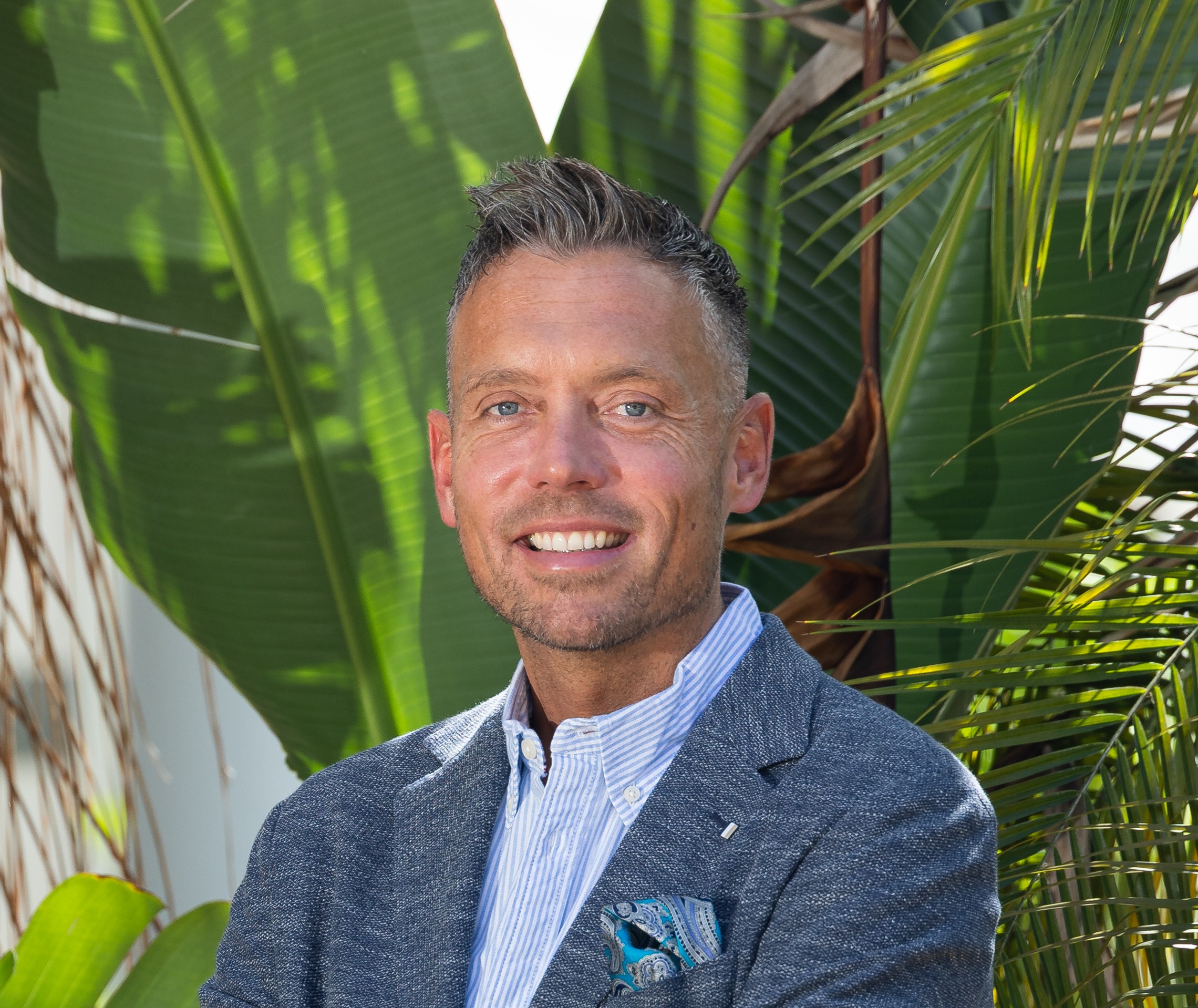
Scott Ward MBA CCMI
Scott Ward is the founder and CEO of Humanise Solutions, which he established three years ago to help organisations elevate their people, leadership and culture through a human-centric, evidence-based approach. Before moving into business and academia, Scott spent seven years as a professional footballer, playing for Luton Town, Crawley Town and Coventry City FC until injury brought his playing career to a close — a turning point that shaped both his research interests and his approach to leadership.
Scott holds an MBA from Warwick Business School, where his research explored the causal relationship between trauma and decision-making — work that continues to inform how he supports young adults, leaders and teams under pressure. Recognised as a Companion of the Chartered Management Institute (CCMI), its highest grade of membership, he combines academic rigour with the discipline, resilience and team-first mindset of the professional game. At the heart of everything he does is a simple belief: that people perform at their best when they are led, developed and valued as human beings first.
What if the most effective way to drive commercial growth wasn’t through rigid KPIs, but through the deliberate cultivation of human connection? You’ve likely seen brilliant Gen Z professionals walk away from roles that lack purpose, or felt the stagnation that occurs when managers lack the emotional intelligence to foster true wellbeing. This is why human-centric leadership training has become essential for organisations that refuse to settle for sterile corporate cultures. It’s a common struggle to maintain momentum whilst navigating a workplace that feels more like a machine than a community.
This approach offers a sophisticated alternative to traditional coaching. You’ll learn how to bridge the gap between scientific methodology and empathetic practice to create an inclusive, high-performing environment. We’ll explore how this leading architecture, built on twelve years of research into trauma prevention, delivers a 100% programme completion rate and a 9.98% feedback rating. You’ll discover the path to building a resilient workforce where every individual feels empowered to contribute to sustainable, collective success.
Key Takeaways
- Move beyond traditional authority-based control by adopting empathy-driven influence that prioritises the human experience to drive organisational excellence.
- Discover how evidence-based human-centric leadership training utilises twelve years of research to transform sterile corporate cultures into thriving environments of psychological safety.
- Learn to identify developmental gaps through bespoke organisational audits and implement certified ILM pathways that ensure professional rigour.
- Bridge the gap between scientific methodology and nurturing leadership to foster long-term wellbeing and unlock the untapped potential of your teams.
- Understand why a scientific approach to workplace psychology is essential for understanding decision-making and preventing trauma within your leadership teams.
What is Human-Centric Leadership Training?
Human-centric leadership training is a transformative methodology that intentionally prioritises the human experience to drive organisational excellence. It represents a fundamental shift in how we perceive the workplace, moving away from managing tasks and toward nurturing the people who perform them. By focusing on the internal qualities of a team, leaders can create a culture where individuals don’t just work; they flourish. This approach is rooted in twelve years of research into decision-making and trauma prevention, ensuring that every strategy is grounded in evidence rather than mere intuition.
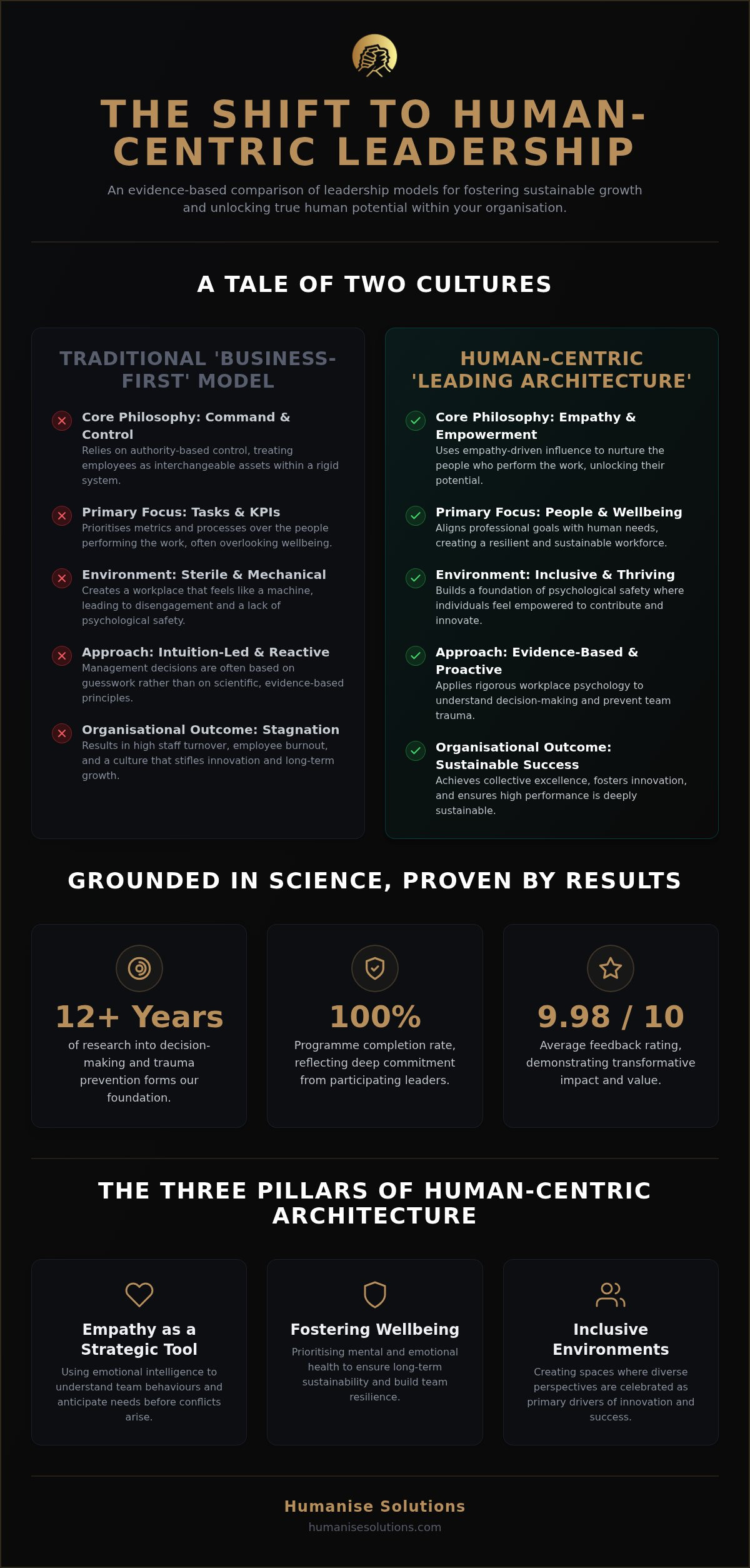
Traditional “business-first” models often treat employees as interchangeable assets within a mechanical system. These sterile structures frequently overlook psychological wellbeing, which inevitably leads to burnout and a lack of innovation. In contrast, our philosophy treats leadership as a “leading architecture”. This is a structured framework designed to achieve specific, client-driven outcomes by aligning professional goals with human needs. It’s about building a foundation where empathy acts as the primary catalyst for unlocking individual potential and fostering collective team excellence.
This methodology shares a strong philosophical connection with Servant leadership, where the primary goal of the leader is to serve the needs of their people. When leaders adopt this mindset, they move from authority-based control to empathy-driven influence. You can explore how these principles are applied across our various learning and development services to see the practical impact on organisational health.
The Core Pillars of a Human-Centric Approach
To implement this architecture effectively, leaders must focus on three essential areas:
- Empathy as a Strategic Tool: Using emotional intelligence to understand team behaviours and anticipate needs before they escalate into conflict.
- Fostering Wellbeing: Prioritising mental and emotional health to ensure long-term sustainability and team resilience.
- Inclusive Environments: Creating spaces where unique abilities and diverse perspectives are celebrated as drivers of innovation.
Why Nurturing Leadership Matters in 2026
The modern workforce, particularly Gen Z talent, values purpose and connection over traditional corporate perks. Organisations that rely on outdated, rigid hierarchies often face high staff turnover in the UK market as employees seek out cultures that respect their humanity. Human-centric leadership training provides the tools necessary to bridge this gap, ensuring that growth is both high-performing and deeply sustainable. Nurturing leadership is the intentional cultivation of growth through empathetic connection.
The Science of Nurturing: Why Evidence-Based Training Wins
True leadership isn’t a guessing game. Whilst intuition often guides traditional management, effective human-centric leadership training relies on the rigorous application of workplace psychology to understand how decisions are actually made. We move beyond the superficial “soft skills” label by anchoring our approach in logic and methodology. This ensures that the transformation you witness in your team isn’t just temporary; it’s a fundamental shift in cognitive behaviour and social connection that drives long-term excellence.
12 Years of Research into Decision-Making
Our methodology is built upon over 12 years of research into decision-making and trauma prevention. This extensive data set allows us to move past generic advice and instead offer a visionary guide for leaders. By understanding the underlying cognitive processes that drive team dynamics, we can predict and mitigate friction before it impacts productivity. We examine how stress affects the brain’s ability to process information and how empathetic leadership can regulate these responses. This evidence-based foundation is a primary reason why we maintain a 100% programme completion rate. When leaders see the logical link between human flourishing and commercial results, they remain deeply committed to the journey of development.
Psychological Safety and Trauma Prevention
Creating a culture of dignity requires more than just a policy; it demands a trauma-informed lens. This perspective allows managers to navigate complex team dynamics with a high level of emotional intelligence. It’s about recognising that every individual brings a unique history to the workplace, which directly influences their reactions and engagement levels. By integrating fostering wellbeing at work into the core leadership curriculum, we help teams build genuine resilience against external pressures. A safe environment isn’t just a “nice to have” feature; it’s the bedrock of a high-performing workforce that feels secure enough to innovate without fear of failure.
This scientific rigour is the engine behind our leading architecture. It allows us to design bespoke learning pathways that address the specific psychological needs of your organisation, ensuring that every intervention is purposeful. With a 9.98/10 feedback rating for delivery, our programmes prove that a methodical, research-backed approach resonates deeply with modern professionals. If you’re ready to transition from traditional models to a more human-focused future, you might want to discuss your team’s specific needs with our experts.
Traditional vs. Human-Centric Leadership: A Comparison
The transition from traditional management to human-centricity marks the difference between a stagnant organisation and a thriving ecosystem. Traditional models rely on authority-based control, where directives flow downwards through fixed hierarchies. This transactional approach treats work as a series of exchanges, often ignoring the psychological safety of the individuals involved. Conversely, human-centric leadership training focuses on empathy-driven influence. It replaces rigid structures with nurturing leadership that views managers as transformative coaches rather than gatekeepers of information. This shift ensures that the focus remains on the human flourishing that powers all commercial success.
Authority and Control vs. Curiosity and Collaboration
Curiosity is the engine of innovation in high-performing teams. Whilst authority-based leaders demand compliance, human-centric leaders cultivate curiosity to unlock hidden potential. Instead of giving orders, these leaders ask the “best questions” to encourage critical thinking and personal growth. These are questions that challenge assumptions and invite team members to contribute their unique perspectives to a problem. This shift fosters a profound sense of belonging amongst diverse staff, as every voice is heard and valued. By prioritising collaboration over control, organisations create a resilient workforce capable of navigating complex challenges with collective intelligence and shared purpose.
Measuring Success: Profitability vs. Human Flourishing
Many corporate structures view profitability as the primary metric of success, often at the expense of employee wellbeing. We believe that profitability is actually a byproduct of a healthy, human-centric culture. When people flourish, the business follows. This isn’t just a philosophical stance; it’s supported by our 9.98/10 feedback benchmark for delivery. High levels of engagement lead to superior outcomes, which is why our programmes achieve a 100% completion rate. Professionals stay engaged because the training feels relevant to their human experience rather than a sterile box-ticking exercise. This level of commitment translates directly into team excellence and long-term sustainability.
Investing in bespoke learning and development programmes ensures a long-term ROI that traditional, off-the-shelf coaching cannot match. By aligning your leading architecture with the specific needs of your team, you build a sustainable foundation for growth. This comparison highlights that the choice isn’t between being “nice” or being “profitable”. It’s about choosing human-centric leadership training to elevate both the person and the bottom line simultaneously, creating a future where everyone has the opportunity to thrive.
Designing a Bespoke Human-Centric Training Programme
One-size-fits-all coaching often fails because it ignores the nuanced social dynamics of your specific team. Designing effective human-centric leadership training requires a methodical approach that begins with an organisational audit. This process allows us to identify precise skill gaps and developmental needs before any modules are delivered. We then construct a leading architecture that tailors every session to your organisational behaviours and culture goals. To ensure sustainable change, we implement a matrix partner system where participants support one another, creating a web of accountability and empathetic connection.
This structured design ensures that the training isn’t just an event, but a steady progression toward a more inclusive and high-performing environment. By aligning the curriculum with your specific commercial outcomes, we ensure that every hour spent in development adds tangible value to the business. It’s about moving beyond generic theory and into the practical application of empathy as a strategic tool for team excellence.
Specialised Tracks: Women in Leadership and Young Adults
Inclusive excellence demands that we address the specific needs of diverse talent pools. Our specialised tracks for empowering women in the workplace provide a visionary guide for navigating career transitions and overcoming internal barriers like Imposter Syndrome. We also prioritise young adult professional development to bridge the social mobility gap, ensuring that emerging talent feels secure and valued from day one. These bespoke initiatives ensure that your leadership pipeline is both diverse and resilient, reflecting a modern workforce that values purpose and social connection.
Certification and Continuous Development
Professional rigour is non-negotiable when cultivating high-performing teams. We utilise ILM-certified workshops to provide middle and senior management with a grounded, logical framework for growth. This commitment to quality is why we maintain a 9.98/10 feedback rating for delivery. Certified programmes provide a 100% completion baseline for UK firms. By embedding structured CPD initiatives into our programmes, we encourage a culture of lifelong learning that evolves alongside your business. This methodical approach ensures that the qualities of confidence and resilience are nurtured over the long term, rather than being forgotten after a single seminar.
To begin crafting a development journey that meets your specific outcomes, get in touch with our specialist consultants for a preliminary audit.
Elevating Your Culture with Humanise Solutions
Humanise Solutions stands as the premier UK partner for organisations dedicated to “Elevating People, Leadership & Culture”. We don’t simply deliver workshops; we architect environments where human flourishing is the primary driver of commercial success. Our commitment to this mission is reflected in our 9.98/10 feedback rating for delivery, a testament to the profound impact our programmes have on professional lives. We provide end-to-end support that begins with thoughtful onboarding and extends through to job network placement, ensuring that every individual we touch is positioned for long-term growth. This thorough approach ensures that the transition to new ways of working is both seamless and deeply felt across the organisation.
By choosing human-centric leadership training with us, you aren’t just buying a service. You’re entering a collaborative partnership focused on sustainable team excellence. We understand that the transition from traditional management to a nurturing model requires steady progression and expert guidance. Our role is to provide the logical foundation and empathetic support necessary to make that shift permanent.
A Partner in Transformation, Not Just a Provider
We act as a visionary guide, helping you rethink the very fabric of your organisational design. Every participant in our programmes is paired with a dedicated matrix partner, providing a supportive layer of accountability that ensures the learning sticks. This isn’t a distant consultancy model; it’s a deeply invested journey where we walk alongside you to unlock the untapped potential within your workforce. Our methodology ensures that the qualities of confidence and resilience are cultivated at every level. You can learn more about the specific nurturing leadership skills required to sustain this transformation in our detailed guide.
Ready to Humanise Your Organisation?
The move from sterile corporate management to empathetic, scientific leadership is a choice to prioritise the human experience. We’ve shown how twelve years of research and a focus on psychological safety create the leading architecture necessary for high-performing teams to thrive. This journey leads to an inclusive culture where resilience and confidence are the standard, not the exception. It’s a path that replaces high turnover with loyalty and sterile environments with spaces of innovation.
Sustainable growth is within reach when you align your professional goals with the fundamental needs of your people. We invite you to start this transition today by exploring our services and discovering how we can tailor our ILM-certified tracks to your unique culture. Let’s work together to build a workplace that truly humanises the professional experience and unlocks the full potential of your teams.
Building a Future Rooted in Human Potential
The transition from a sterile corporate environment to a thriving, human-focused culture is a journey that requires both scientific rigour and empathetic warmth. We’ve explored how human-centric leadership training acts as a leading architecture to unlock individual potential whilst ensuring long-term organisational excellence. By moving beyond traditional hierarchies and embracing a nurturing model, you create a resilient workforce where psychological safety and innovation go hand in hand. It’s a shift that replaces high staff turnover with genuine engagement and shared purpose.
Our methodology is backed by over twelve years of research into decision-making and trauma prevention, ensuring that every intervention is grounded in logic. This evidence-based approach is why we maintain a 100% completion rate for our initiatives and an average 9.98/10 programme feedback rating. When you prioritise the human experience, sustainable growth becomes a natural byproduct of your team’s success. If you’re ready to transform your organisational culture, elevate your leadership culture with Humanise Solutions today. We’re here to help you cultivate a workplace where every individual has the opportunity to flourish.
Frequently Asked Questions
What is the primary goal of human-centric leadership training?
The primary goal is to intentionally prioritise the human experience to drive organisational excellence. By focusing on the internal qualities of individuals, this approach creates a culture where professionals don’t just work but flourish. It moves beyond traditional task management by using empathy as a strategic tool to unlock untapped potential. This methodology ensures that organisational growth is built on a foundation of psychological wellbeing and collective team excellence.
How does human-centricity improve employee retention in the UK?
Human-centricity improves retention by addressing the modern workforce’s desire for purpose and connection. In the UK, organisations often struggle with high turnover amongst Gen Z talent who reject sterile corporate cultures. By implementing human-centric leadership training, firms can foster inclusive environments that celebrate unique abilities. This shift from authority to empathy-driven influence creates a resilient workforce that feels valued, directly reducing the likelihood of staff seeking alternative employment.
Can human-centric leadership be measured through business KPIs?
Business success is a natural byproduct of human flourishing, and we measure this through specific benchmarks. Our programmes maintain a 100% completion rate and a 9.98/10 feedback rating for delivery, proving that professionals find the training deeply relevant. We also track job outcomes, which typically range between 50% and 80%. These metrics demonstrate that prioritising the human experience leads to tangible improvements in organisational performance and long-term sustainability.
What role does psychological safety play in leadership development?
Psychological safety serves as the essential bedrock for innovation and team resilience. Our leadership development uses a trauma-informed lens to ensure that every individual feels secure enough to contribute their unique perspectives without fear. By integrating mental health awareness and dignity at work into the curriculum, we help leaders navigate complex social dynamics. This safety allows teams to move past stagnation and toward a state of high-performing, inclusive excellence.
Are there specific programmes for women leaders and young adults?
We provide dedicated tracks specifically designed to empower women and support young adults. Our Women Leadership ILM Programme addresses unique barriers such as Imposter Syndrome whilst providing a professional framework for career transition. Similarly, our Young Adult Development initiatives focus on bridging the social mobility gap for emerging talent. These bespoke tracks ensure that your leadership pipeline is diverse, inclusive, and equipped with the confidence needed for success.
How long does a typical bespoke leadership programme take to implement?
Implementation is flexible and tailored to your organisational needs, ranging from half-day workshops to comprehensive long-term tracks. Every participant begins with a structured three-day onboarding process. Day one focuses on personal action plans, day two involves setup into our job network, and day three initiates the matrix partner system. This methodical human-centric leadership training sequence ensures that the transition is thorough and yields immediate, sustainable results for the organisation.
Is ILM certification included in human-centric training?
Professional rigour is a core component of our training, and many of our tracks are ILM-certified. These certified programmes ensure that middle and senior management receive a grounded, logical framework for their development. By utilising ILM standards, we provide a recognised benchmark for quality that supports lifelong learning and continuous professional development. This certification adds a layer of authority to the nurturing leadership practices we cultivate within your organisation.
What is the difference between management and nurturing leadership?
Traditional management often relies on authority-based control and transactional exchanges within fixed hierarchies. In contrast, nurturing leadership is the intentional cultivation of growth through empathetic connection. It shifts the focus from giving orders to asking the best questions that unlock a team’s potential. Whilst management focuses on compliance, nurturing leadership fosters a sense of belonging and celebrates the unique abilities of every individual for collective success.